




Compare Merino Tech’s coordinated 250-weight set, standalone long sleeves and hiking socks to choose the layer that matches your weather, packing style and tolerance for wool care.
Choosing a merino layer is rarely just a question of warmth. A set can simplify packing for a cold trip, while a single long sleeve is easier to work into clothes already in your drawer. Socks solve a smaller problem, and synthetic or blended base layers may appeal if care and initial spend matter more than natural-fiber preference.
Merino Tech’s range spans these different jobs, so the useful comparison is how much of a system you need, what weight is on the product page and which compromises you are comfortable with. We reviewed the brand’s product information and compared the listed materials and intended uses.
Heads-up: we earn a commission from some links in this article. It never changes the price you pay.
The short version: Choose the coordinated 250 set if you want top, bottoms and accessories to work together for cold-weather travel. A standalone long sleeve is the more adaptable first merino purchase, and hiking socks are the narrowest commitment. A conventional synthetic base layer may be the easier fit for shoppers prioritizing familiar care or a lower-cost wardrobe staple.
- Compare whether you need a full set or one garment.
- Check fabric weight against expected activity and weather.
- Read composition, fit and care notes on the product page.
| Option | Listed fabric or contents | Best for | Check before choosing |
|---|---|---|---|
| Men’s Denim Merino Wool Set 250 + Beanie & Gaiter | 250-weight set with beanie and gaiter | Building a coordinated cold-weather kit | Set contents, fit and care |
| Men Merino Long Sleeve 250 Army Green | Single 250-weight merino long sleeve | Filling a top-layer gap | Size, garment details and wash instructions |
| Merino Wool Hiking Socks – (Pack of 3) Dark Grey | Wool blend; reinforced heel and toe listed | Targeting foot comfort | Fiber mix, sizing and care |
| Typical synthetic base layer | Varies by garment and blend | Comparing familiar care and materials | Read the specific composition and label |
The set covers more of a cold-weather kit
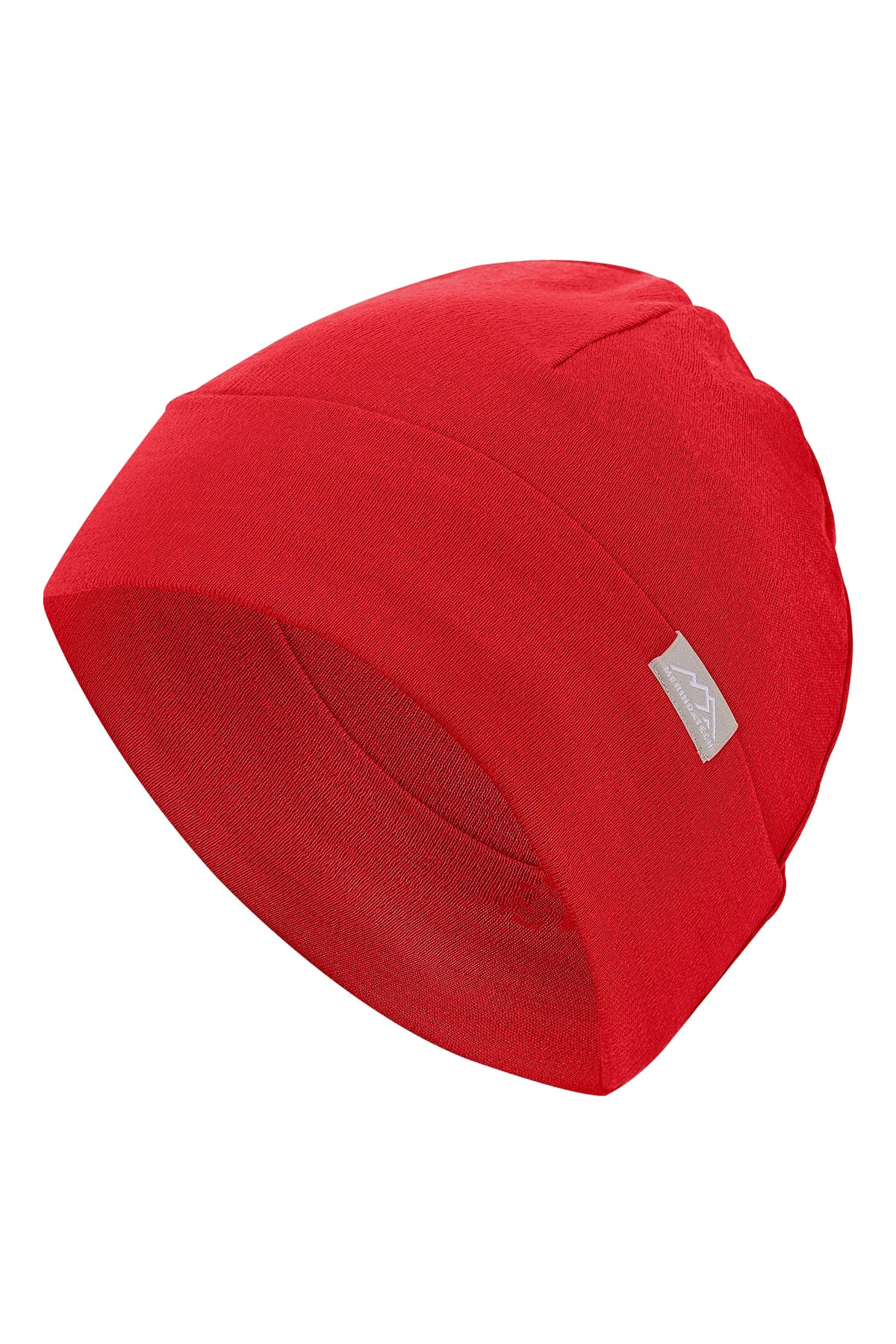
The Men’s Denim Merino Wool Set 250 + Beanie & Gaiter groups a 250-weight base-layer outfit with two accessories. That is its clearest advantage over buying an individual top: fewer separate choices when building a cold-weather kit, and a coordinated color story for travel, hiking or snow days. The product page presents it as a set rather than a single garment.
That breadth also creates the main drawback. If you already own a suitable beanie or neck warmer, the bundle may duplicate gear. A set may include pieces you already own, and the heavier 250-weight designation is a reason to check the intended conditions and your activity level before choosing. Review the individual garment details and the size guidance on the Men’s Denim Merino Wool Set 250 + Beanie & Gaiter listing before treating it as a universal base layer. Compare it with the standalone 250 long sleeve if you do not need the accessories.
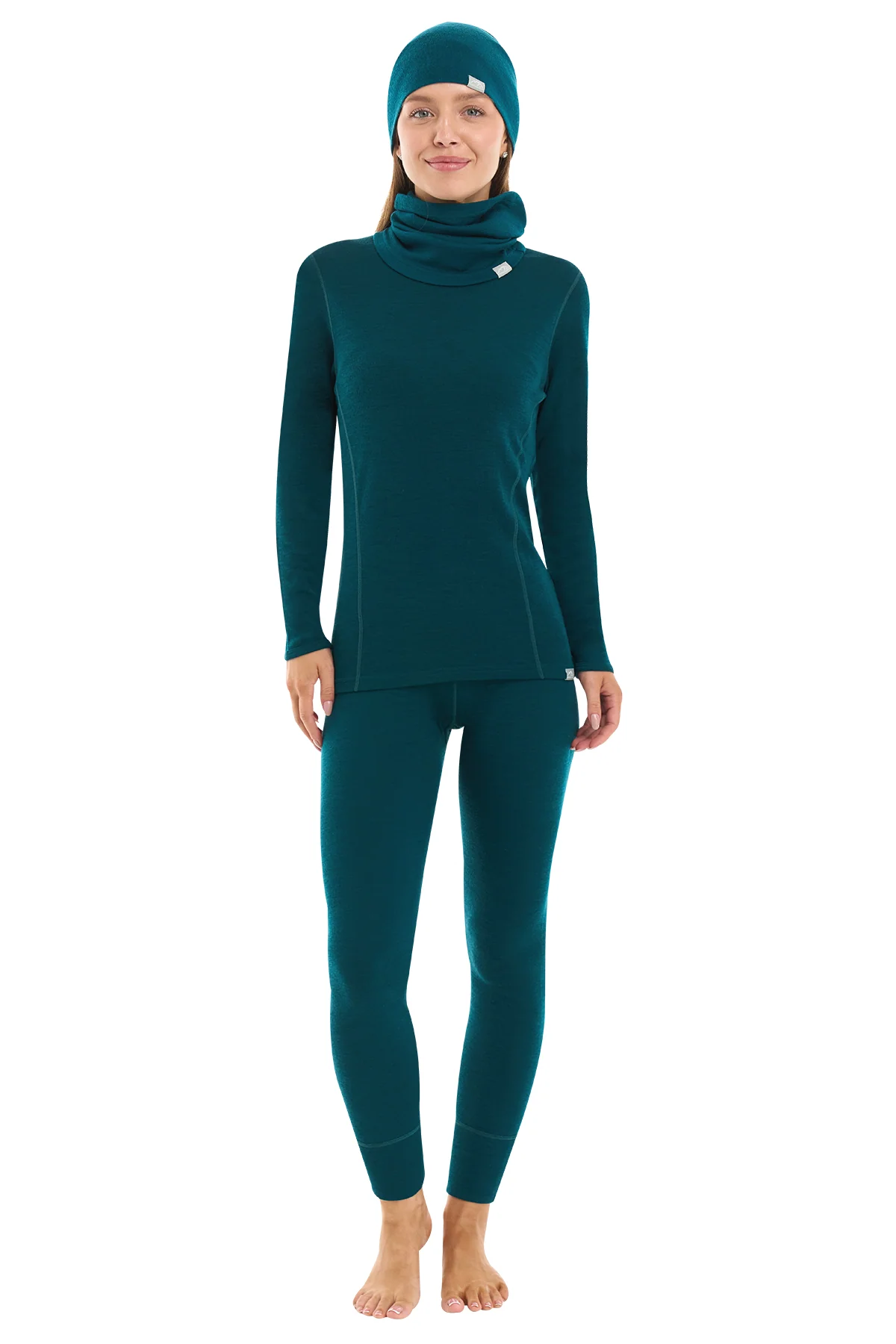
It is easiest to compare the set with a typical synthetic bundle by asking what arrives together, not by assuming one fiber wins every category. Merino Tech identifies merino wool as its core fabric and describes temperature regulation, moisture management and odor resistance as benefits. These are brand claims; warmth and comfort still depend on fit, layering, activity and personal preference.
- Best fit: a shopper assembling several compatible cold-weather pieces.
- Trade-off: less useful when some of the included accessories are already owned.
- Before choosing: confirm the set contents, garment weights, size range and care directions on the listing.
A standalone long sleeve gives more room to build
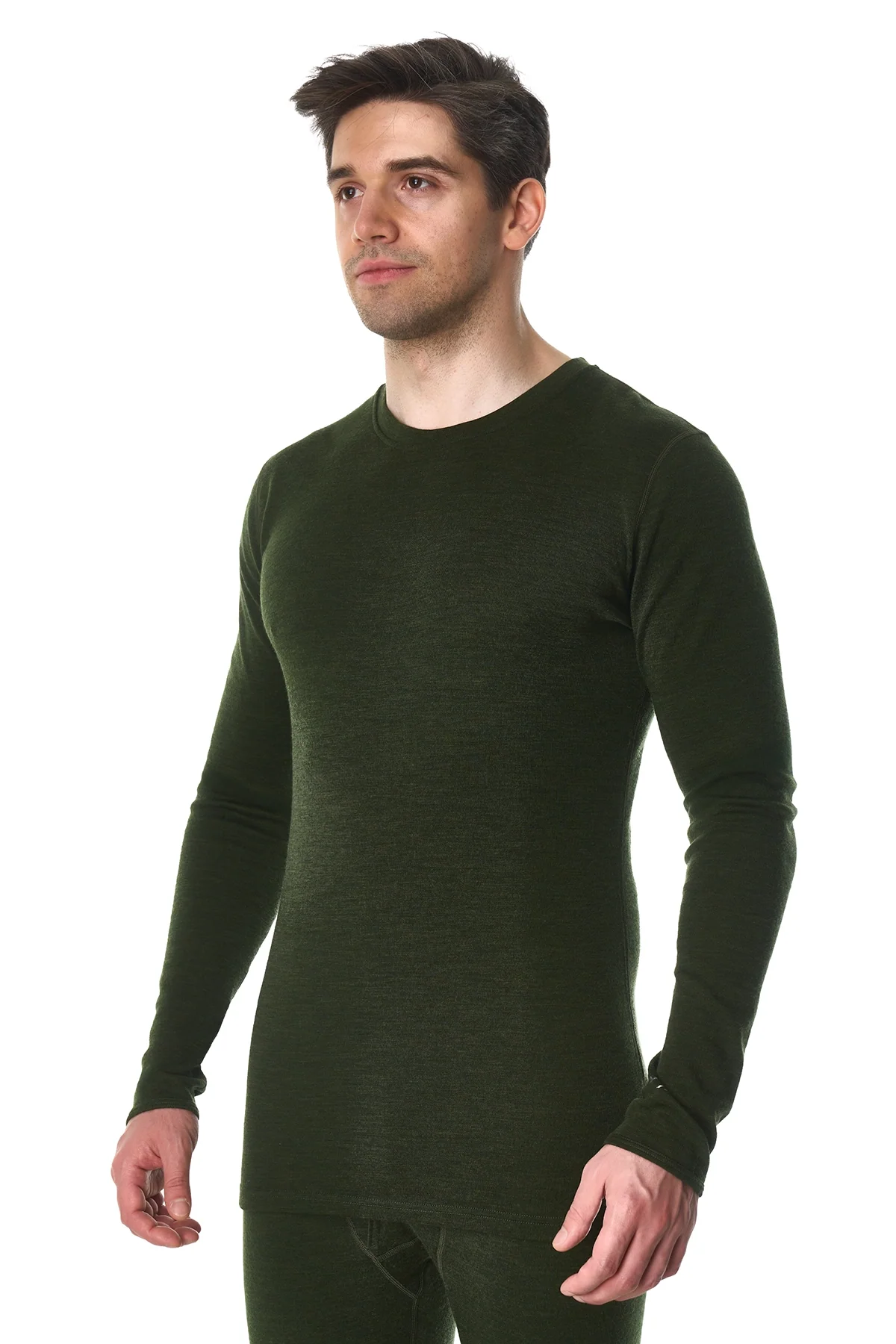
The Men Merino Long Sleeve 250 Army Green keeps the decision focused on one garment. It makes sense when a shopper wants merino next to the skin but already has an insulating mid-layer, pants and cold-weather accessories. This single-piece approach also lets you test how a 250-weight layer fits into a wardrobe before committing to a coordinated set. The Denim Blue long sleeve provides a standalone alternative to weigh against the larger bundle.
Its limitation is equally practical: the top does not complete an outfit. If your trip calls for warm lower-body layers or face and neck coverage, those remain separate decisions. The 250 designation points to a more substantial option than a lightweight everyday tee, but the product page should be checked for exact construction, fit and care details. See the Men Merino Long Sleeve 250 Army Green listing when you want a single-piece starting point. This 250-weight top is also easier to combine with existing accessories than a multi-piece set. The Denim Blue 250 shirt is another listing to compare for color and current sizing.
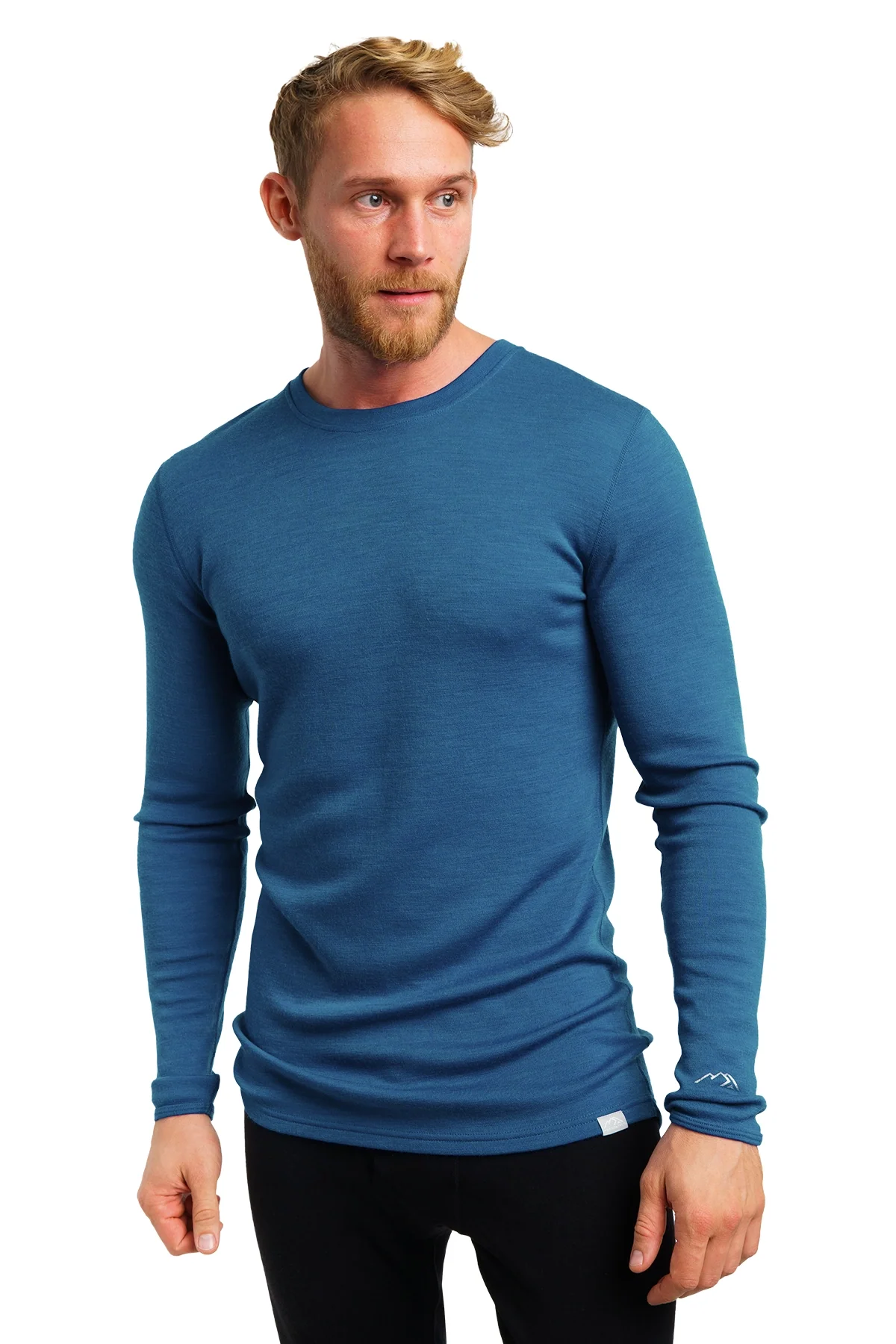
The Men’s Merino Long Sleeve 250 Denim Blue offers a similar single-top role in another color. Comparing it with the Army Green version is mainly a styling and availability decision rather than evidence of a different technical tier. Buyers looking at two similar base layers should check whether the current listing identifies a different neckline, cut or fabric detail before paying more for one option. Compare the Army Green 250 shirt against the Denim Blue version on the store pages.
Against a common synthetic long sleeve, the merino option may suit someone drawn to wool’s natural fiber profile and the brand-stated odor resistance. Synthetics are often available in a wider range of price points and can be simpler to machine wash, though that varies by fabric blend and care label. We would treat care instructions and garment composition as a deciding criterion instead of assuming every synthetic or merino garment behaves alike. The Men’s Merino Long Sleeve 250 Denim Blue page is the place to compare its listed details with the Army Green shirt.
Hiking socks are the narrower entry point
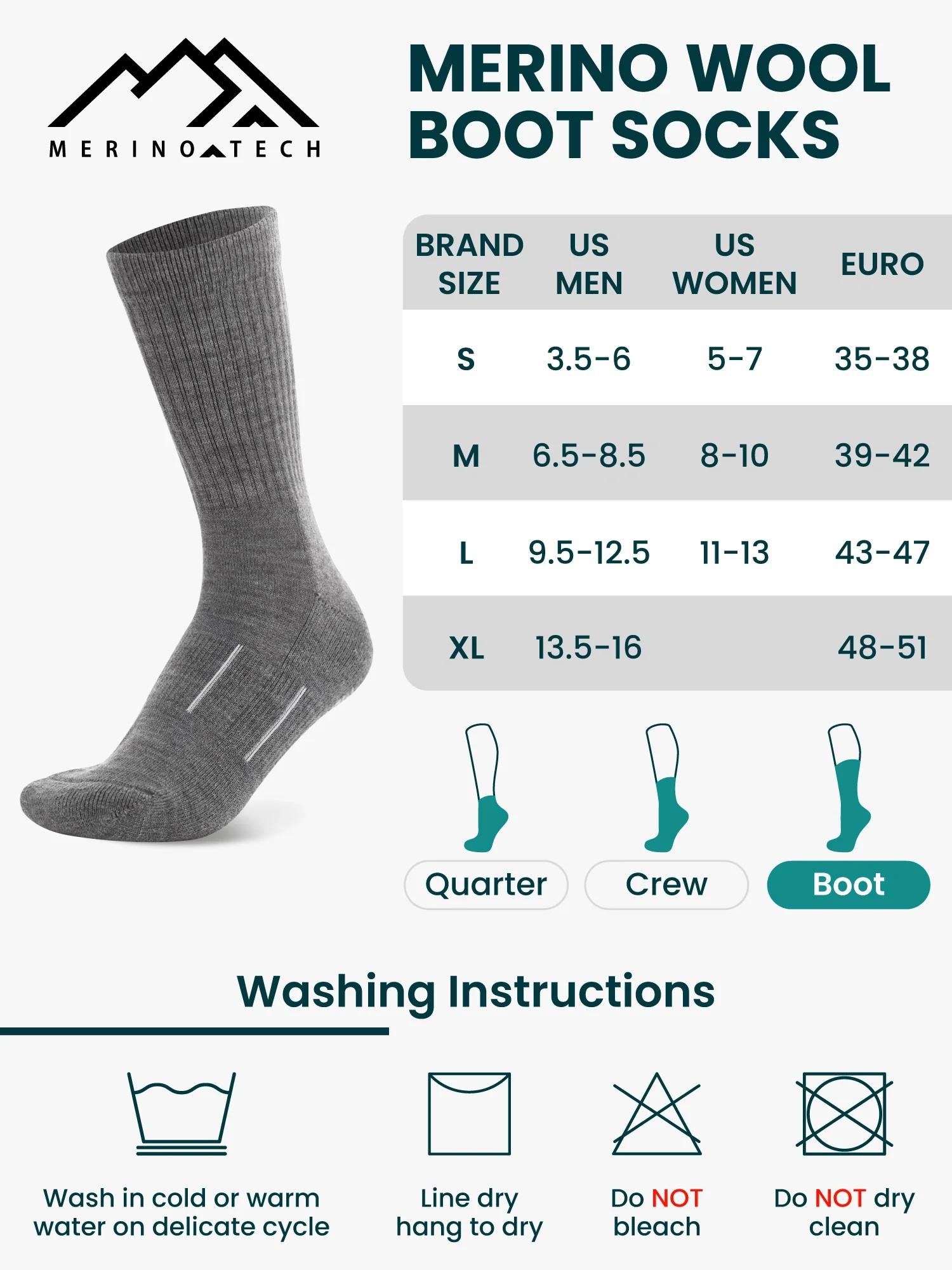
The Merino Wool Hiking Socks – (Pack of 3) Dark Grey are a more contained way into the range. The product page lists a wool blend that includes polyester, nylon and spandex, plus reinforced heel and toe areas and a seamless toe. Those construction details matter for a sock that sees repeated walking, and the blend means this is not a pure-wool product.
Compared with a typical synthetic hiking sock, the Merino Tech pack puts wool into a targeted accessory rather than asking shoppers to switch an entire base-layer wardrobe. That can be a sensible priority if feet are your main comfort concern. It is less compelling if your socks already fit well or you want the lightest possible gear at the lowest cost. Compare the three-pair pack with an individual base layer only if you are deciding where to put a limited gear budget. Confirm sizing, fiber composition and care before ordering from the Merino Wool Hiking Socks – (Pack of 3) Dark Grey product page. The Denim Blue long sleeve remains a more complete choice if your priority is torso coverage.
- Choose the set when several cold-weather pieces are missing at once.
- Choose one long sleeve when you want a versatile first garment and already own other layers.
- Choose socks when you want a focused accessory and your current base layers are covered.
- Compare synthetics when care simplicity, broad selection or a lower entry point leads your shortlist.
The fiber trade-off matters more than the label
Merino wool is the defining material in the featured apparel, but choosing wool does not automatically settle comfort, durability or value. Merino Tech states that its fabric offers thermoregulation, moisture management and odor resistance; shoppers should read those as intended benefits, not guarantees that every wearer will stay comfortable in every condition. A close-fitting base layer still needs the right size and appropriate layers over it.
Care is another real comparison point. Some wool garments require gentler washing and drying than everyday synthetic basics. If you travel with limited laundry access, check the specific instructions and consider how often the piece will be worn between washes. The socks’ stated synthetic components also mean composition can vary across products, so compare each item rather than generalizing across the brand.
Synthetic alternatives vary widely by fabric, construction and care label. They can be a better fit when a particular garment offers the care routine or material blend you prefer, so compare the specific listing rather than assuming all synthetics are alike. The trade-off is that a shopper who specifically wants wool’s feel or odor-related properties may not find those priorities met in a fully synthetic garment. There is no single winner across every trip.
For any of these choices, use the brand’s current listing to verify sizing, included pieces and care. Product availability and details can change, and the comparison here is based on the information the store presents. If a listing does not clearly answer whether a set includes a particular accessory or how a fabric should be washed, that is a reason to pause before choosing.
The honest verdict
For a complete cold-weather setup, the coordinated Men’s Denim Merino Wool Set 250 + Beanie & Gaiter is the most convenient Merino Tech option, provided you need its full contents. The single-shirt option offers a narrower alternative. For a flexible first purchase, the Men Merino Long Sleeve 250 Army Green is the clearer choice; for a smaller change to your kit, the hiking socks make more sense. Synthetic base layers remain the sensible alternative when care ease and lower commitment outweigh a preference for merino.
The honest limitation is that a wool-focused choice may not suit shoppers who prefer a different care routine or want only a light layer. Check the current product details and care directions before deciding which trade-off suits your plans.
Choose the set for a full cold-weather kit, a long sleeve for flexibility, or socks for a focused upgrade.