



A research-led look at Merino Tech’s fabric weights, useful pieces and limits can help you decide whether its wool layers fit your routine.
Merino Tech makes a broad range of wool clothing, but a broad catalog can leave a practical question: which pieces make sense for a normal wardrobe, and which are aimed at specific cold-weather or outdoor use? We reviewed the brand’s US product pages and available fabric information, not physical garments, to understand how the range is organized.
The clearest organizing idea is fabric weight. You can shop light base layers, warmer midweights, heavier layers and accessories, then narrow by garment type and intended activity. That is useful, though it also means the buyer needs to understand layering and check the details of each listing. Weight is a starting point, not a complete fit or performance rating.
Heads-up: we earn a commission from some links in this article. It never changes the price you pay.
The short version: Merino Tech is worth considering if you specifically want merino layers organized by weight, with tops, bottoms and accessories that can work as a system. Its strength is range and clear wool-first positioning; the trade-off is that choosing the right warmth and fit requires attention to individual product details, and the brand’s performance benefits are brand claims rather than independent testing.
Merino Tech organizes the range around fabric weight
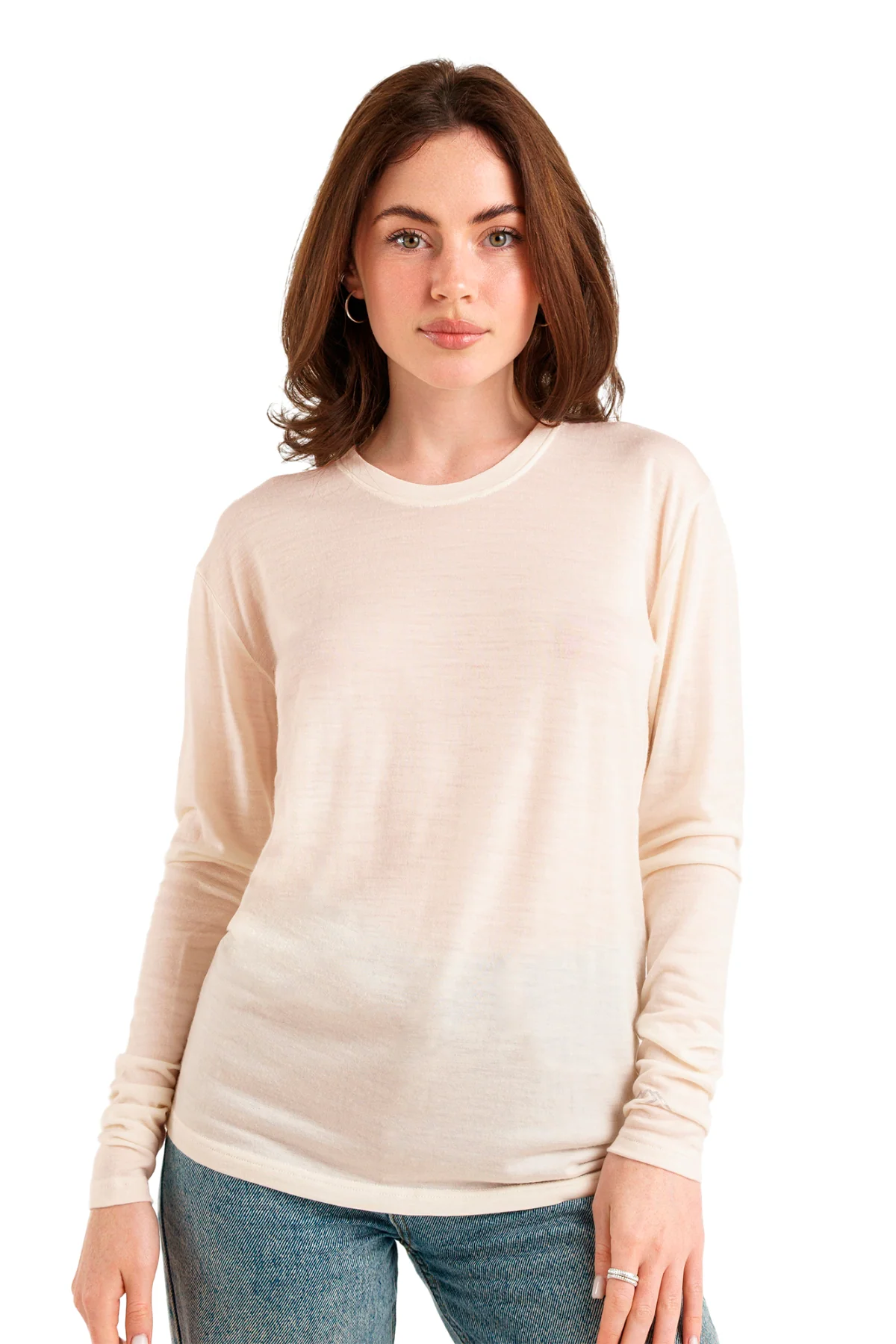
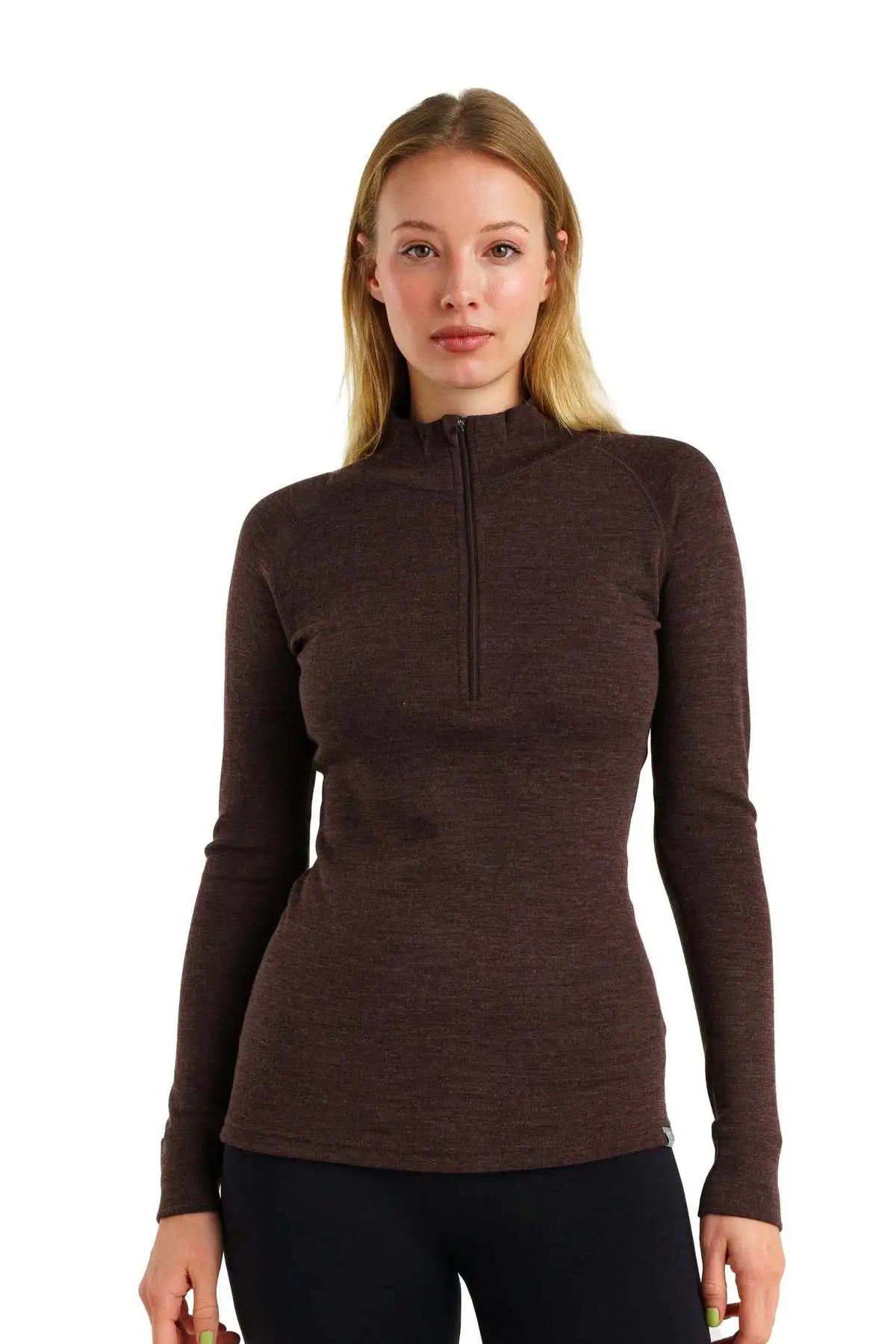
Across its US store, Merino Tech describes apparel made with Australian merino wool and identifies fiber fineness of 17.5 microns on product pages. It groups garments into weights including 165, 180, 190, 200, 250, 260 and 320. These numbers are presented as garment weights, so they are a useful starting point for comparing lightness and intended warmth, not a complete substitute for checking construction, cut or layering guidance on the page. See how that ladder appears on the 165 long sleeve and 250 half zip.
- For a coordinated cool-weather start: compare the 250 set.
- For lighter everyday layering: look at the 180 V-neck.
- For a compact accessory: consider the 165 gaiter.
The 250 set makes coordinated cold-weather layering simple
The Women’s Denim Merino Wool Set 250 + Beanie & Gaiter combines a 250-weight base-layer set with two accessories. It is one of the more complete entries in the catalog for someone who wants coordinated pieces rather than assembling a system one item at a time. The product page describes the 250-weight merino layer for cool-weather outdoor use, while the bundled head and neck pieces extend coverage.
The 180 V-neck has a lighter everyday role
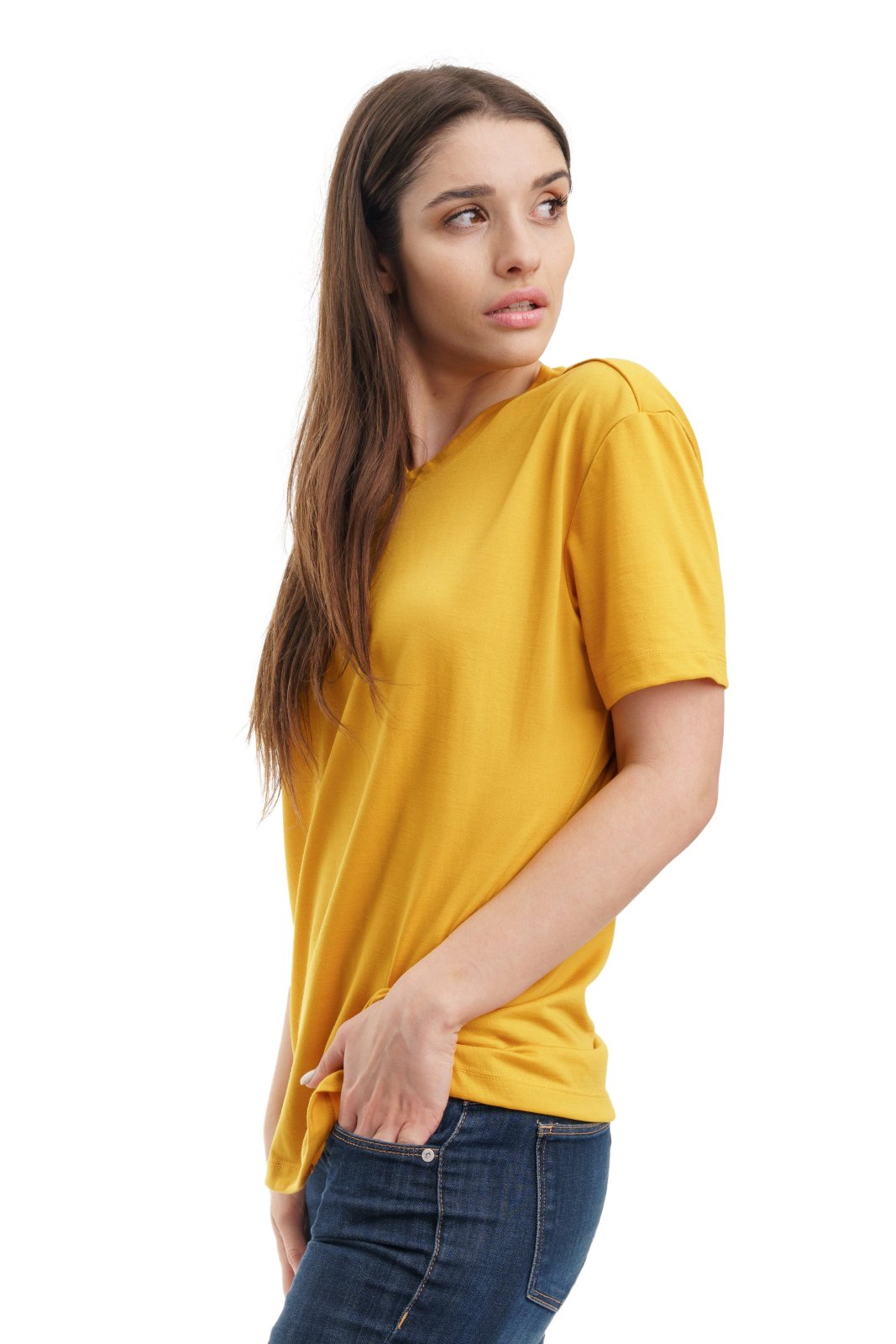
The Women’s Merino T-shirt 180 Mustard V-Neck offers a lighter alternative to the thicker base layers. Its short sleeves and V-neck give it a more ordinary-shirt shape, making it easier to imagine for travel, casual wear or as a light layer under other clothing. The listing identifies the 180 weight and merino construction; check its size chart and garment details before deciding how it will fit into your wardrobe.
This kind of piece illustrates an appealing part of the range: wool is not confined to long underwear or winter kits. A simple tee can be more flexible across seasons and settings than a dedicated thermal top. The limitation is equally straightforward: a lighter shirt is not a substitute for an insulated layer in cold weather, and shoppers who dislike wool texture or need a precise fit should review the garment information carefully. Compare the 180 V-neck with the warmer 250 set and confirm each page’s sizing notes.
- Choose a lighter tee when the goal is a versatile shirt or a base layer in mild conditions.
- Choose a 250 top when you expect cooler temperatures and want more coverage.
- Compare sleeve length, neckline, size chart and care instructions before selecting a layer.
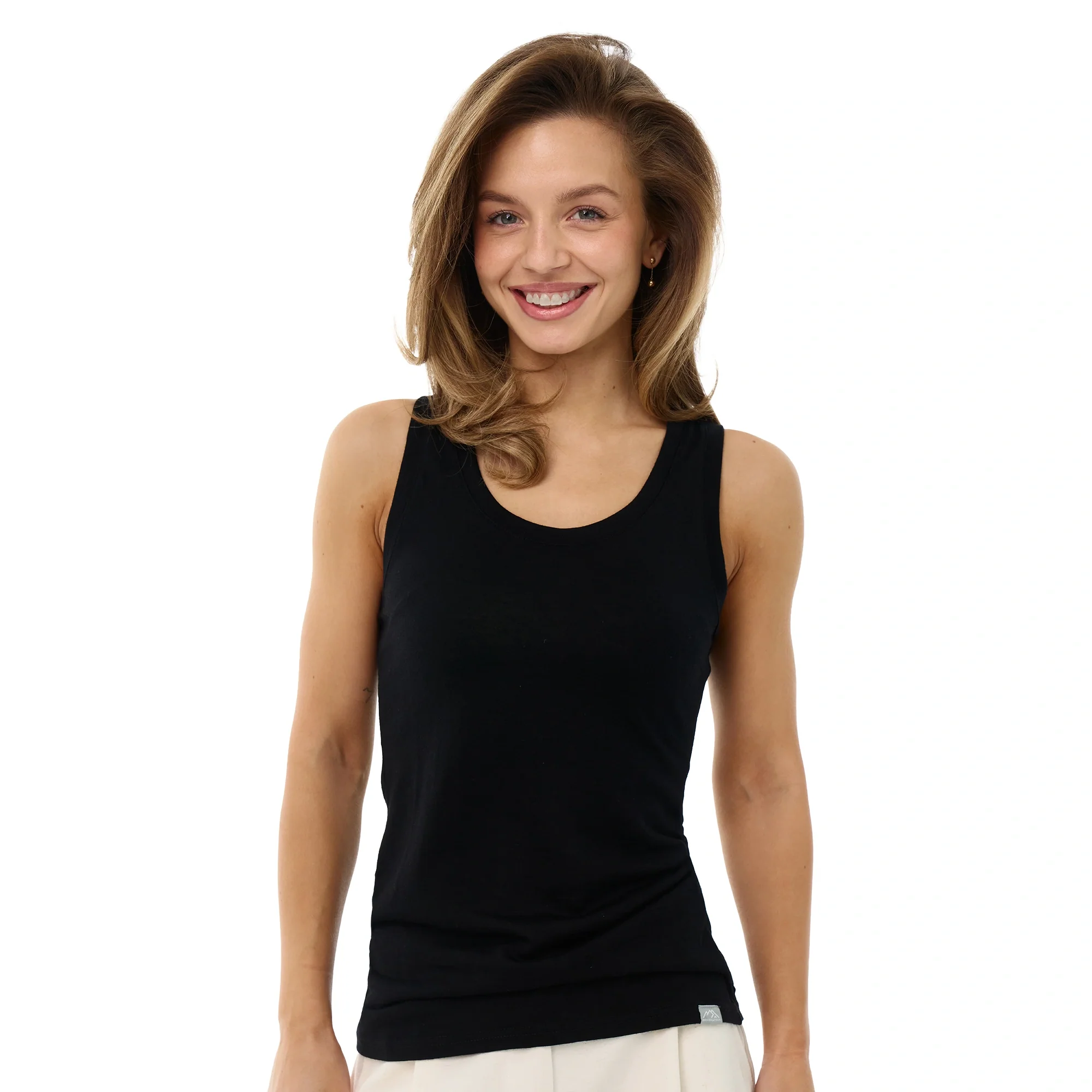
The tee is a practical option for shoppers exploring merino without committing to a complete cold-weather outfit. For other shirt shapes, compare the black merino tank and men’s 250 long sleeve. If you already own enough everyday shirts, the stronger reason to buy would be a specific need for a wool layer while traveling or moving between indoor and outdoor settings. See the Women’s Merino T-shirt 180 Mustard V-Neck
The 165 neck gaiter is a focused accessory
The Merino Neck Gaiter 165 Rusty Orange is a compact accessory in the lighter weight family. It can add coverage around the neck without the bulk of a scarf, and it may be useful when a jacket collar alone is not enough. The product is a small, specific purchase rather than a full outfit, so it makes sense mainly for shoppers who already know they want a neck layer or are rounding out a merino kit.
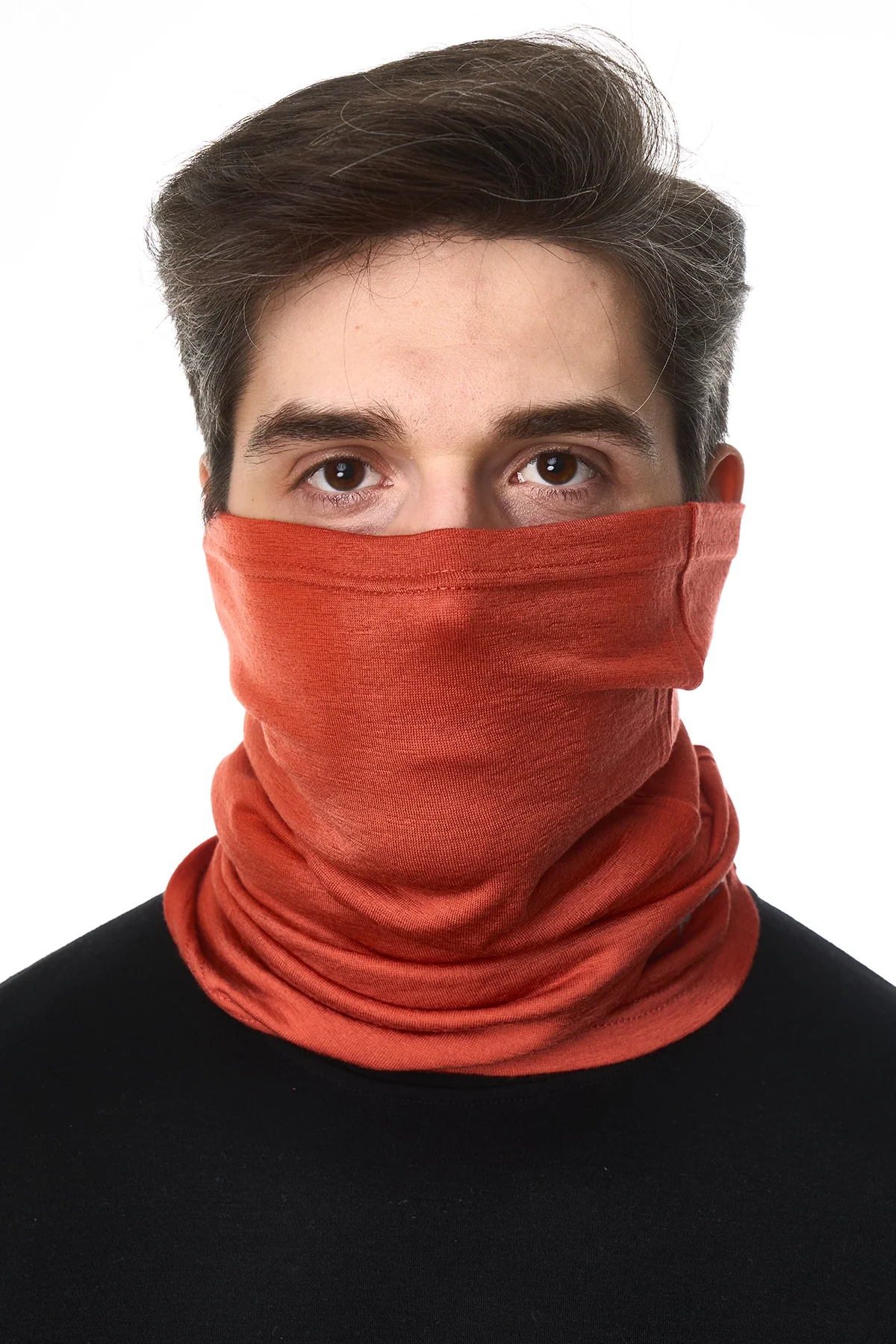
The product page is the place to confirm dimensions, available colors, care and how the fabric is described. You can compare the Rusty Orange 165 gaiter with the 180-weight tee or the 250-weight set to see how each fits a different role. Color and accessory preference are personal, and a gaiter cannot provide the face protection or insulation of a purpose-built covering in every condition. We would treat it as a convenient add-on when its use is clear, not as the reason to choose the brand as a whole. See the Merino Neck Gaiter 165 Rusty Orange
The range rewards shoppers who compare details
A large catalog creates choice, but it also asks buyers to do some sorting. Fit remains a personal variable. In addition to weight, there are garment types, colors, men’s and women’s cuts, and activity groupings. Product pages should be checked individually because a weight label does not tell you the whole story about fit, seam placement, layering ease or care. The 250 set page, 180 tee page and 165 gaiter page make useful examples of how the catalog spans a coordinated system, standalone shirt and accessory. We recommend making a short list of what your existing wardrobe lacks before browsing.
- Set the likely temperature range and activity first.
- Decide whether you need a standalone shirt, a close-fitting base layer or an accessory.
- Compare the stated weight and product construction on the relevant listing.
- Check the current size chart, care information and availability before ordering.
Compare the coordinated denim set with a standalone 180 tee before settling on a direction. There are also ordinary reasons to pass. Merino is not the right material preference for everyone, and some shoppers will prioritize lower-maintenance synthetics, a specific fit they can verify locally, or a lower-cost basic. The store’s broad selection does not itself establish durability or comparative performance. We found useful product detail and a coherent weight system, but the claims about comfort and odor control remain claims made by the brand.
This makes Merino Tech a stronger fit for wool-focused layering than for someone seeking a single universally useful top. The product range gives the former shopper more ways to build a wardrobe around weight and garment type. The latter may be better served by deciding on one versatile piece, comparing fabric preferences, and avoiding a set whose extras would sit unused.
The honest verdict
Our recommendation is to consider Merino Tech if merino is already your preferred material and you value a range that spans light tees, base layers, heavier tops and accessories. The 250 set is the most complete entry point for coordinated cool-weather layering, while the 180 tee and 165 gaiter suit narrower, lighter-use needs. Review the exact product details and current availability before choosing.
The limitation is that the brand’s benefits are presented by the brand itself, and weight labels cannot settle questions of fit, feel or long-term performance. Shoppers who need independent comparative evidence or prefer synthetics should compare alternatives before committing. For a wool-first wardrobe, however, Merino Tech’s weight-based range makes a considered shortlist possible. If the pieces that match your routine are clear, revisit the 165 gaiter details or 250 set contents and confirm availability.
Choose Merino Tech for the breadth of its weight-based wool layers, after matching the specific garment to your climate and fit needs.