


Use garment weight, coverage and activity to choose Merino Tech layers that fit your plans without buying more than you need.
- Start with conditions, then choose a fabric weight
- Choose coverage before buying a matching set
- Use a single long sleeve for adaptable layering
- Add accessories only where they solve a coverage gap
- Compare the options against your packing plan
- Check fit, care and availability on the product page
- The honest verdict
Choosing a merino base layer is easier when you start with the conditions you expect, rather than the largest set or heaviest fabric in the catalog. A close-fitting layer for a cold hike has a different job from a light shirt for travel or daily wear.
We reviewed the product information on the US Merino Tech store and organized the choices around three practical questions: how much coverage you need, how warm a layer should feel, and whether you want a complete outfit or one versatile piece. The recommendations below point to specific garments, with details described as the brand lists them.
Heads-up: we earn a commission from some links in this article. It never changes the price you pay.
The short version: Match the fabric weight to your activity and the layers going over it. The Women’s Merino Thermal Set 165 Deep Blue provides coordinated top-and-pant coverage, the Men’s Merino Long Sleeve 190 Black V-Neck is a single top for flexible wear, and the Merino Neck Gaiter 165 Army Green adds packable coverage around the neck.
Start with conditions, then choose a fabric weight
Merino Tech groups garments by weight, which offers a useful first filter. A lighter piece can make sense when you expect movement, variable temperatures or a warm indoor stop. A heavier layer is more relevant when you plan to spend time in cold conditions and have room for it under an outer layer. Weight alone does not tell you how warm you will feel: fit, wind, activity, and your midlayer all matter.
Note the coldest expected conditions and what you will wear over the base layer. A shell and insulated midlayer affect warmth, so choose the base as part of that system. Merino Tech lists Australian merino and describes moisture management, thermoregulation and odor resistance as benefits; these are brand claims.
- Choose a lighter weight for higher-output activity or changing indoor and outdoor conditions.
- Consider a midweight layer when you expect sustained cold and plan to wear a shell or jacket over it.
- Treat the number as one comparison point; check the garment details and intended use on its product page.
- Plan for the whole system, including socks, pants and outer layers, rather than buying by top weight alone.
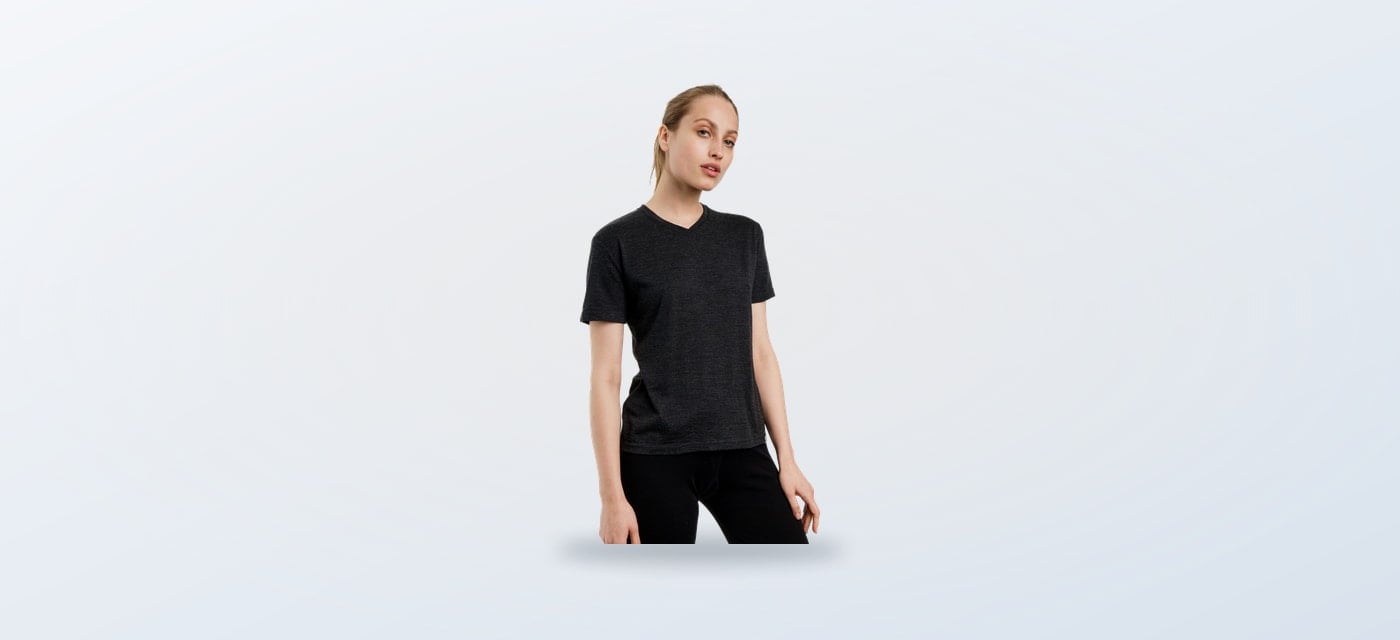
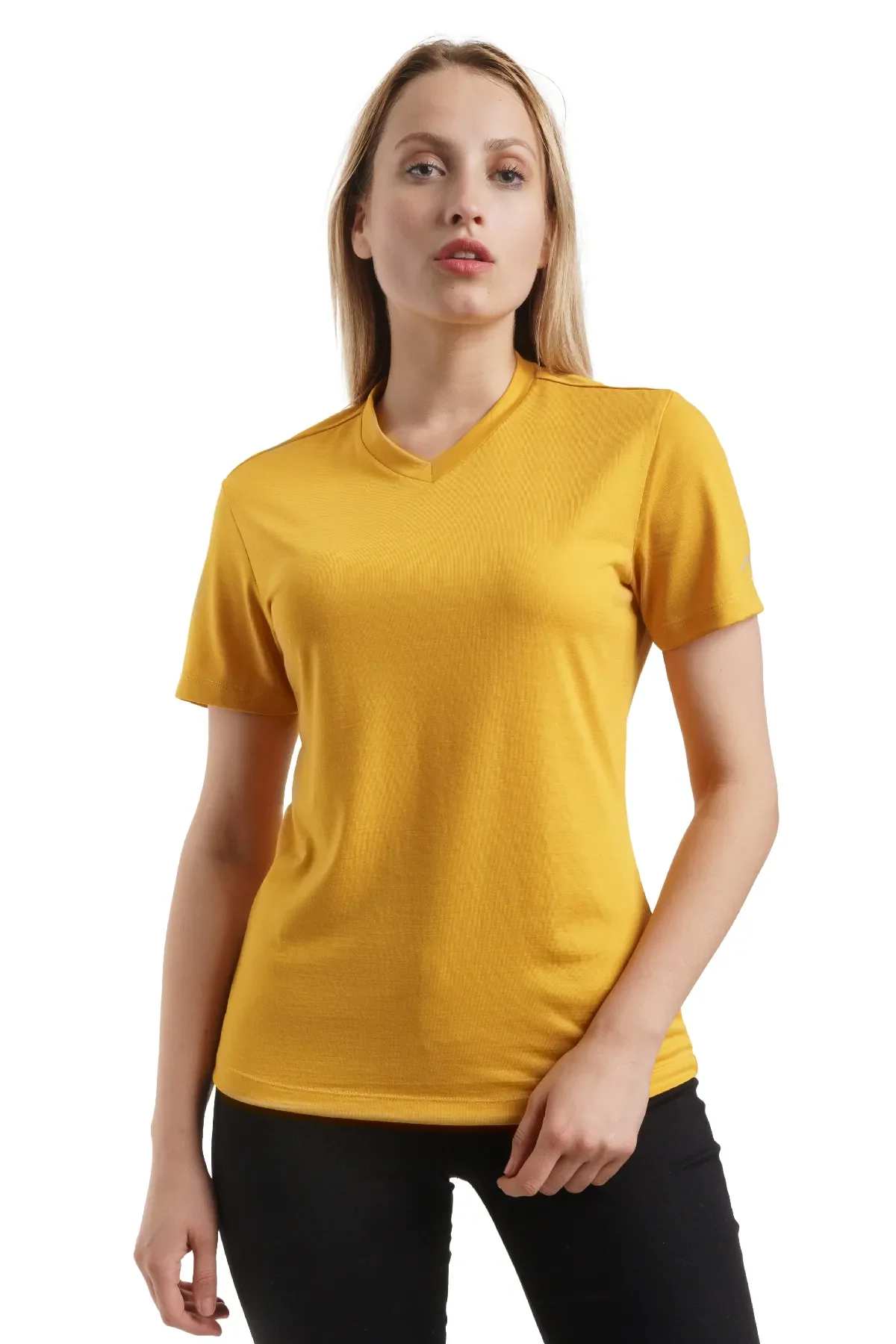
For a lighter single piece, the Women’s Merino T-shirt 180 Gold V-neck illustrates the kind of choice to look for: a short-sleeve shirt with a V neckline, suited to milder conditions or indoor use. Confirm the current product details, sizing and stock on the store before deciding.
Choose coverage before buying a matching set
Coverage is the next decision: how much of your body needs a base layer. A top-and-bottom set can simplify packing for cold-weather trips because both pieces are designed around the same layer plan. A single shirt leaves more flexibility if you already own suitable bottoms or expect conditions to vary. Consider whether you need thermal coverage while moving, sitting still, or both.
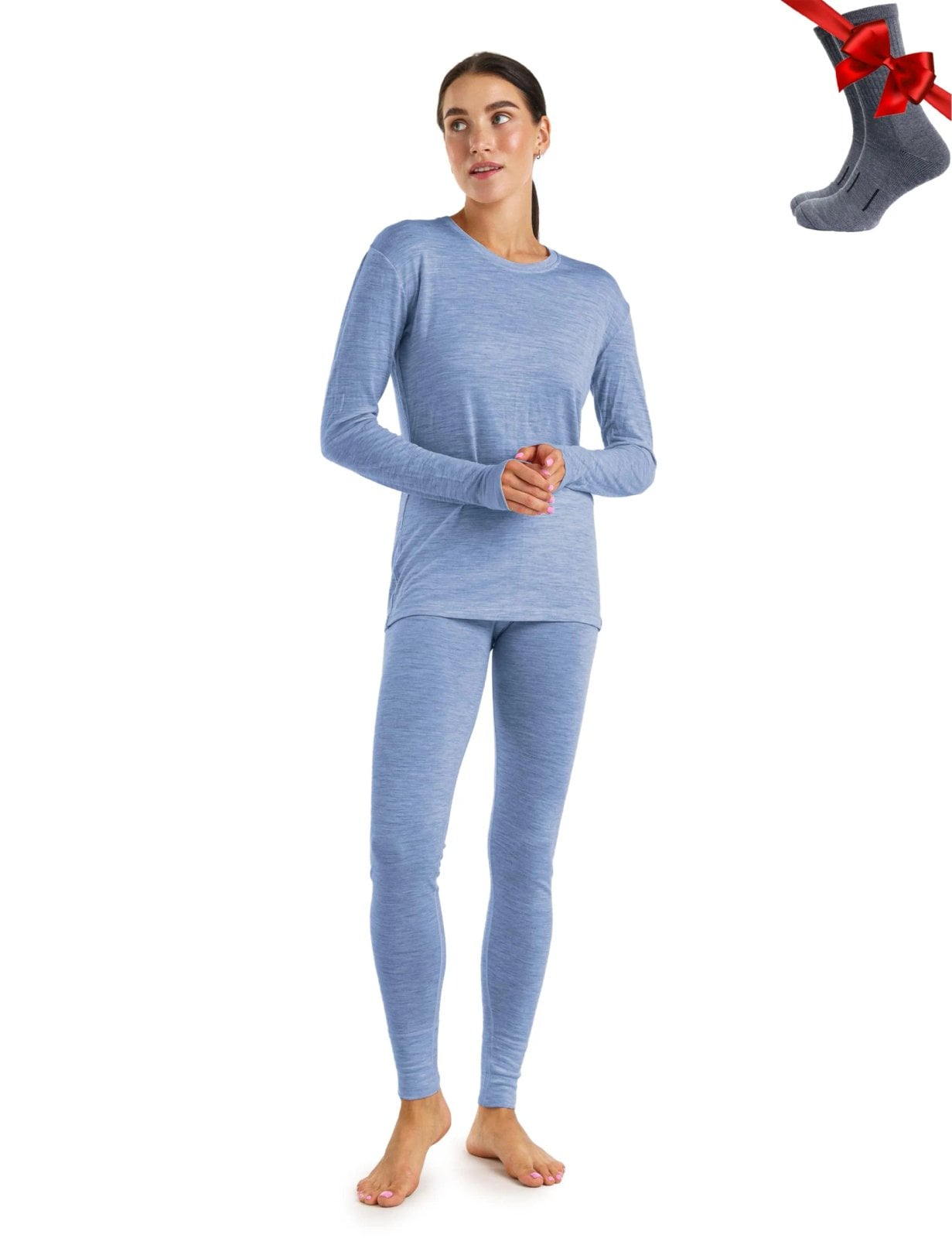
The Women’s Merino Thermal Set 165 Deep Blue includes a long-sleeve top and matching pants. Its product description identifies Australian merino wool and positions the set for layering or standalone use in colder seasons. This option makes sense when coordinated coverage is the goal, such as a winter trip where you expect to wear a base layer under everyday clothes or outdoor gear.
- Choose a set if you want matching top-and-bottom coverage in one decision.
- Choose a single top if you already have bottoms or need a piece for everyday rotation.
- Check size charts and return terms before selecting a close-fitting base layer.
- For travel, count how many days you will wear each layer and how easily you can wash and dry it.
Use a single long sleeve for adaptable layering
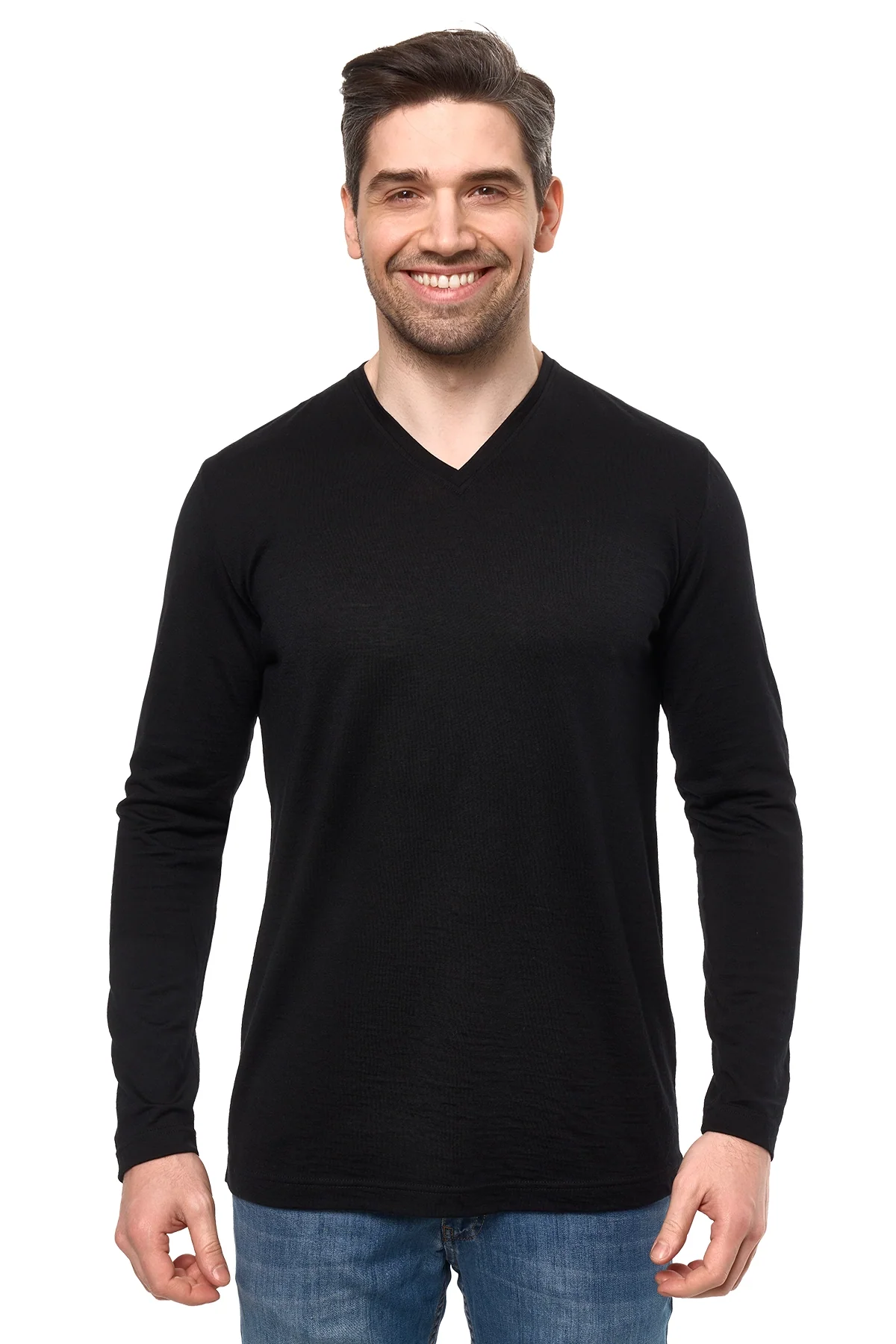
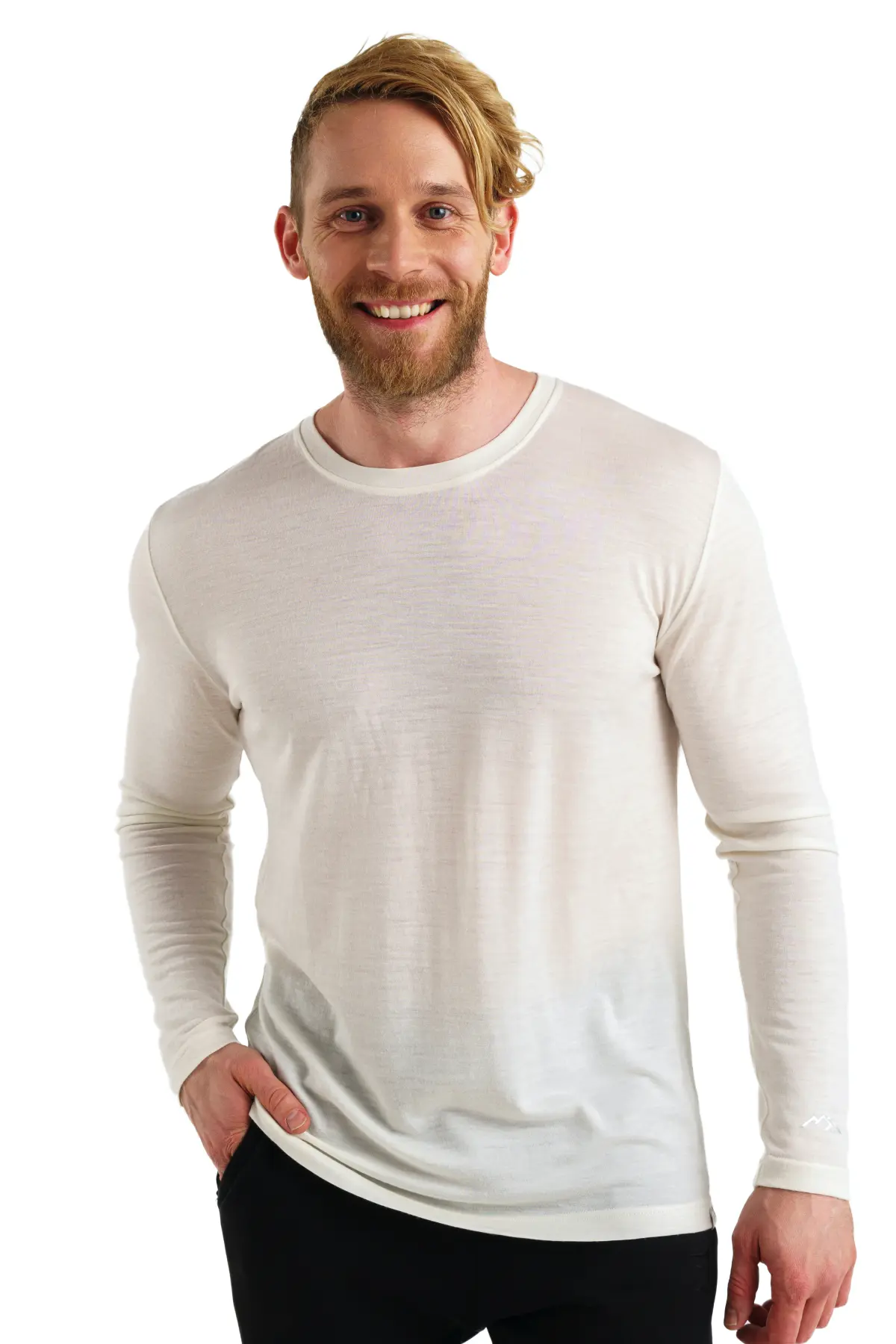
A long-sleeve top is a practical middle ground when a T-shirt seems too light but a full set feels unnecessary. The Men’s Merino Long Sleeve 190 Black V-Neck is listed as a lightweight, long-sleeve garment intended for base, midlayer or standalone use. The product page describes merino as breathable and moisture-wicking and moisture-wicking, with natural odor resistance. Those features may be useful on a multi-stop day, but your comfort will still depend on fit, weather and pace.
The V-neck can sit discreetly under shirts. Check the store’s fit notes and size chart so the base layer sits close without restricting movement.
When deciding whether this kind of top fits your plan, ask whether it will serve more than one role. A garment that works for a cool commute and as a first layer on a weekend trip may earn space in a small wardrobe. If you only need a layer for deep winter, compare the Men’s Merino Long Sleeve 190 Black V-Neck with heavier choices in the men’s range and build around the outer layers you already own.
Add accessories only where they solve a coverage gap
Accessories can be useful when exposure is concentrated around the neck or face, but they should come after the core layers. The Merino Neck Gaiter 165 Army Green is listed as a lightweight, stretchy accessory for activities including hiking, skiing, cycling and running. Its product description says it can be worn as a neck covering or beanie. Check the page for fit and care instructions before use.
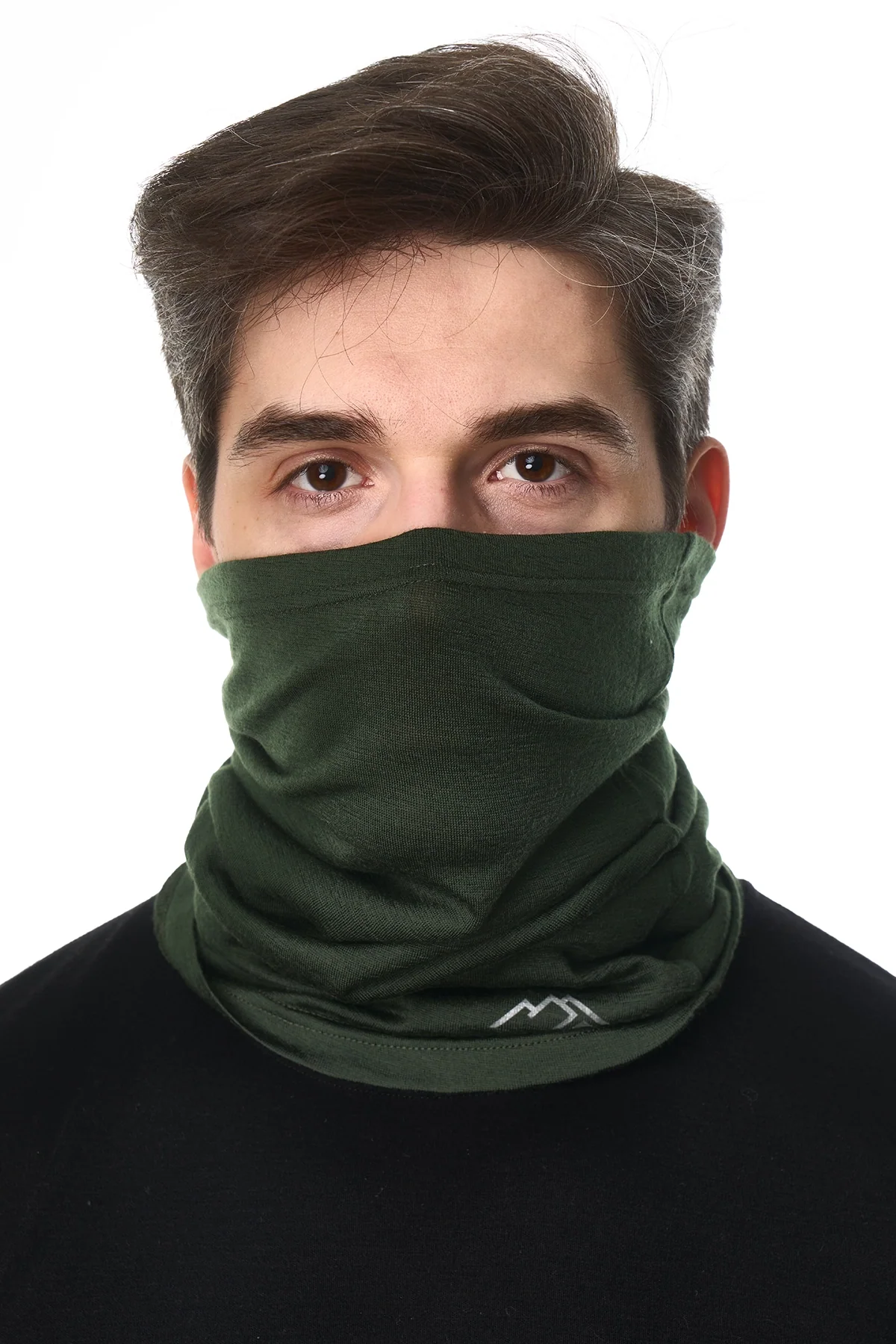
The Merino Neck Gaiter 165 Army Green may be a sensible addition if wind exposure is a recurring issue or you want a small accessory that packs easily. The brand describes it as easy to pack into a pocket. It will not replace a warm hat or a properly insulated face covering in every condition. For a less accessory-heavy setup, focus first on a suitable base layer, insulating midlayer and weather protection.
- Select an accessory to address a specific gap, such as exposed neck coverage.
- Check the stated dimensions and available colors rather than assuming a universal fit.
- Keep activity and weather in view; a lightweight gaiter is not equivalent to insulated headwear.
Compare the options against your packing plan
This compact comparison keeps the decision tied to use, rather than treating every merino garment as interchangeable.
| Option | Coverage | Useful for | Check before choosing |
|---|---|---|---|
| Women’s Merino Thermal Set 165 Deep Blue | Long-sleeve top and pants | Coordinated lightweight coverage | Both-piece sizing and bundle contents |
| Men’s Merino Long Sleeve 190 Black V-Neck | One long-sleeve top | Flexible base or standalone wear | Fit, neckline and layer compatibility |
| Merino Neck Gaiter 165 Army Green | Neck and optional head coverage | Packable accessory for active days | Dimensions, intended fit and care |
The products cover different jobs, so the right pick depends on what is missing from your current kit. If your drawer already has long underwear, the Men’s Merino Long Sleeve 190 Black V-Neck may be the more useful purchase. If you need coordinated coverage for a colder trip, the Women’s Merino Thermal Set 165 Deep Blue makes the decision simpler. If wind at the neck is the recurring annoyance, add the Merino Neck Gaiter 165 Army Green after the main clothing choice.
Check fit, care and availability on the product page
Before choosing a size, compare your measurements with the store’s chart and read any notes about intended fit. Base layers are worn close to the skin, but a tight fit can restrict movement or feel uncomfortable during long days. Product pages are also the best place to confirm fiber composition, care guidance, color choices and whether a size is currently available.
Care matters because wool garments have different instructions from many synthetic baselayers. Follow the garment label and current store guidance rather than assuming machine washing or tumble drying is suitable. If easy care is a priority, treat those instructions as part of the buying criteria alongside fabric weight and coverage.
- Review the size chart and compare it with a layer that already fits well.
- Read care instructions before purchase, especially if you need frequent washing while traveling.
- Confirm the exact product contents, color and size availability on the US store page.
- Check the current product information for materials and construction details before checkout.
Merino Tech has a broad range across weights, tops, sets and accessories. Start with conditions and coverage, then narrow by fit and product details so the purchase fills a real need.
The honest verdict
For a first decision, choose the garment that fills the clearest gap in your layering system. The Women’s Merino Thermal Set 165 Deep Blue suits shoppers who want matching top-and-bottom coverage; the Men’s Merino Long Sleeve 190 Black V-Neck is a flexible single-piece option; and the Merino Neck Gaiter 165 Army Green is a smaller add-on for neck coverage. Merino Tech is a natural choice for readers specifically seeking Australian merino apparel organized by fabric weight, with product pages that let you compare garments directly.
The limitation is that merino is not automatically the best fabric for every budget, climate or care routine. Fit and warmth are personal, and the brand’s performance descriptions are not a guarantee for every wearer. Use the store’s sizing and care information, then check current availability and price on the exact option you plan to buy.
Choose by coverage and conditions first, then use Merino Tech’s weight-based range to find the layer that fits your plan.