




We compare Segway’s main ride formats by route, utility, comfort and audience so you can choose a model without paying for features you will not use.
- Four Segway formats solve four different trips
- The main Segway models compared by use case
- MAX G3 Plus makes the strongest commuter case
- MUXI Pro turns an eBike into everyday carrying capacity
- Xafari is the comfort-led choice for mixed surfaces
- Ninebot S2 Kids keeps the family option separate
- Your route should decide the Segway category
- The honest verdict
Choosing an electric ride is less about finding the most feature-heavy model and more about matching the machine to the trip. A short paved commute, a grocery run with a child, a mixed-surface weekend ride and a family recreation day all ask for different compromises.
Segway makes that comparison unusually broad. Its store brings scooters, eBikes, self-balancing products and recreational vehicles together, but the range is not one neat ladder of better and worse. The categories solve different problems.
Heads-up: we earn a commission from some links in this article. It never changes the price you pay.
The short version: the MAX G3 Plus is the clearest fit for regular urban commuting, while the MUXI Pro makes more sense when carrying people or cargo matters. Choose the Xafari for comfort across varied surfaces and the Ninebot S2 Kids for family-focused self-balancing riding.
Four Segway formats solve four different trips
Before comparing specifications, separate the use cases. The MAX G3 Plus is a stand-up scooter for one rider and a route that rewards a compact footprint. The MUXI Pro is a cargo eBike, so its value is tied to carrying capacity and everyday utility rather than folding convenience.
The Xafari shifts the emphasis toward a more cushioned, mixed-surface eBike experience. The Ninebot S2 Kids belongs to a different category again: it is a self-balancing scooter designed around younger riders and controlled recreational use. Comparing all four on speed alone would hide the real decision.
- Daily commute: prioritize range, suspension, lights, controls and storage.
- Errands and family transport: prioritize cargo space, passenger accessories and a stable riding position.
- Mixed surfaces: prioritize tire format, comfort and confidence away from smooth pavement.
- Family recreation: prioritize rider fit, supervision and a manageable learning curve.
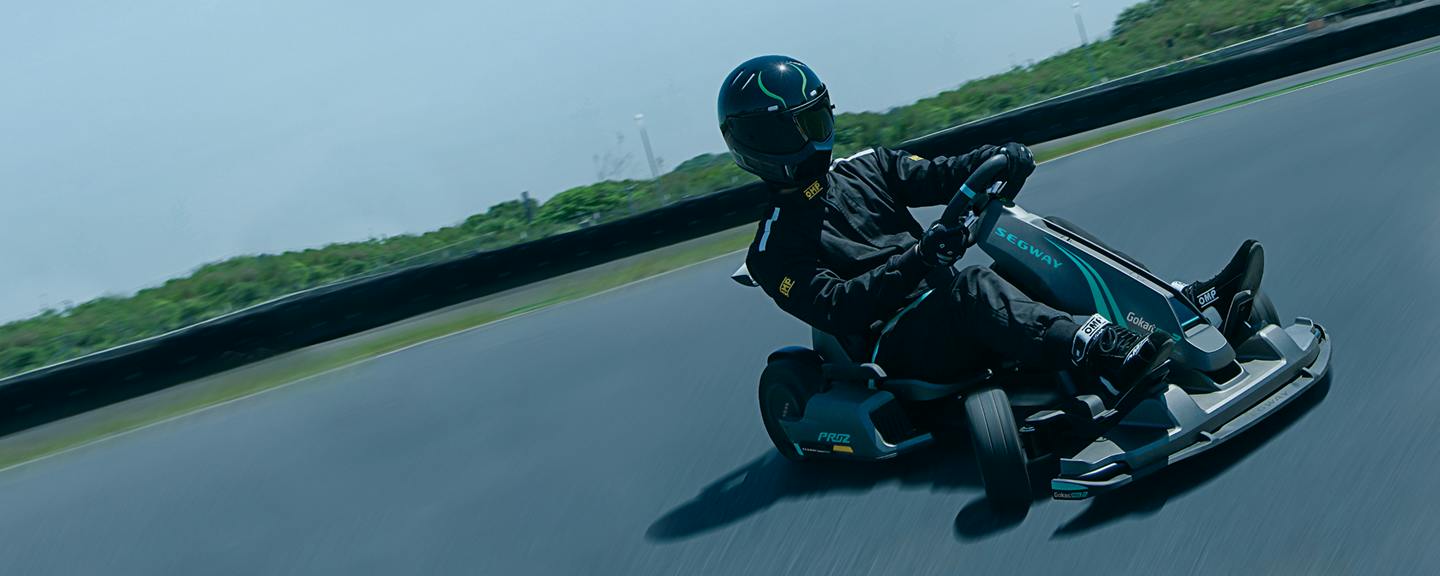
The main Segway models compared by use case
This table is a starting point, not a ranking. Segway’s listed configurations and store availability can change, so use each product page to check the current price, included equipment and delivery details before deciding.
| Model | Best fit | Why it stands out | Trade-off |
|---|---|---|---|
| MAX G3 Plus | Urban commuting | Longer-route scooter focus, suspension and connected controls | Less useful for cargo or rough recreation |
| MUXI Pro | Errands and family utility | Cargo eBike format with passenger accessory options | Needs more storage space than a scooter |
| Xafari | Mixed-surface riding | Fat-tire eBike approach with comfort-led positioning | More bike than most short commutes require |
| Ninebot S2 Kids | Family recreation | Self-balancing format for a younger audience | Not a replacement for adult transport |
The important contrast is between transport utility and recreational appeal. A bigger motor or more pronounced tire design does not automatically improve a short commute, just as a compact scooter cannot replace a cargo bike when the trip includes shopping or a passenger.
MAX G3 Plus makes the strongest commuter case
For a buyer who rides alone on paved streets, the MAX G3 Plus is the most direct recommendation in this group. Segway positions it as an electric scooter built for longer everyday routes, with suspension and connected controls that address the two things a commuter notices most: surface comfort and information while riding.
That makes it a closer alternative to a conventional commuter scooter than the eBikes here. It should also be easier to store than the MUXI Pro, although buyers still need to check folded dimensions, charging arrangements and the actual route conditions.
- Choose it when most trips are solo and paved.
- Look closely at the store’s current specification list for included connected features.
- Allow for charging and secure storage at home or work.
MUXI Pro turns an eBike into everyday carrying capacity
The MUXI Pro is the better comparison when the ride has a practical job to do. Its cargo eBike design gives it a clearer role for groceries, deliveries, child-friendly errands or equipment that would make a scooter awkward. Segway also lists a passenger kit, which broadens the possible use case without pretending this is a small commuter machine.
The cost of that usefulness is physical scale. A cargo eBike needs a safe parking plan, more room to maneuver and a realistic view of how often you will actually carry something. If the answer is rarely, the MAX G3 Plus is likely the simpler tool.
Xafari is the comfort-led choice for mixed surfaces
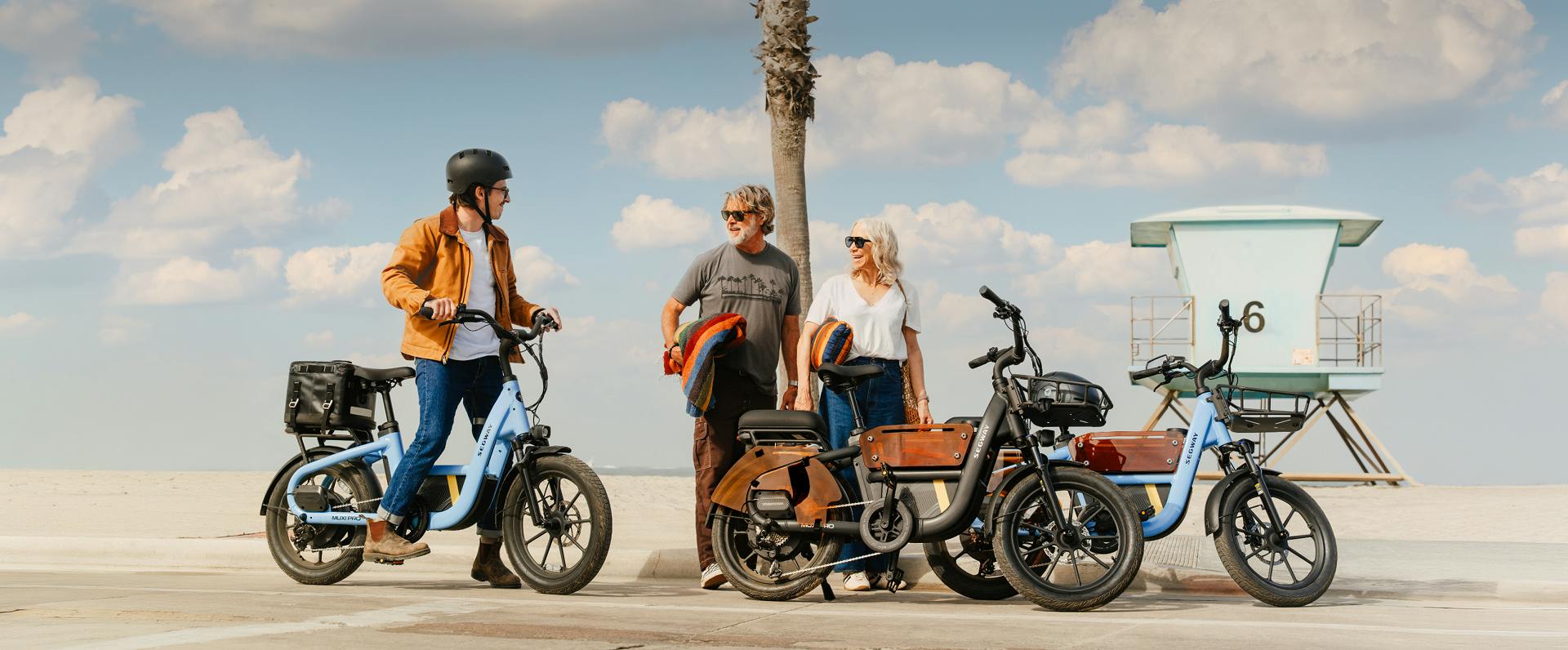
The Xafari is aimed at a different buyer from both the commuter scooter and the cargo bike. Its fat-tire eBike format points toward a more relaxed, stable-feeling ride across varied surfaces and recreational routes. That makes it a stronger choice for someone who wants one bike for neighborhood riding, paths and weekend exploration.
It is not automatically the best choice for a short city commute. The larger bicycle format can be harder to store, and the equipment that adds comfort away from smooth pavement is unnecessary if every trip is a few blocks on good asphalt. Check the current Xafari listing for the configuration available in your area.
Ninebot S2 Kids keeps the family option separate
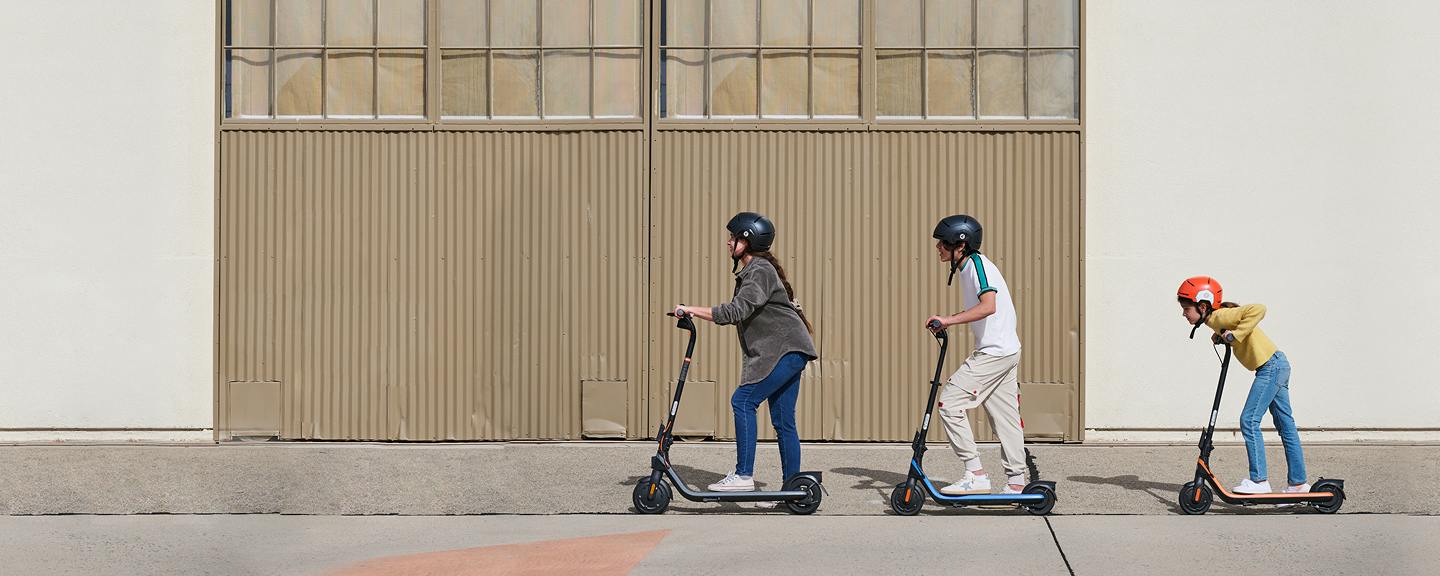
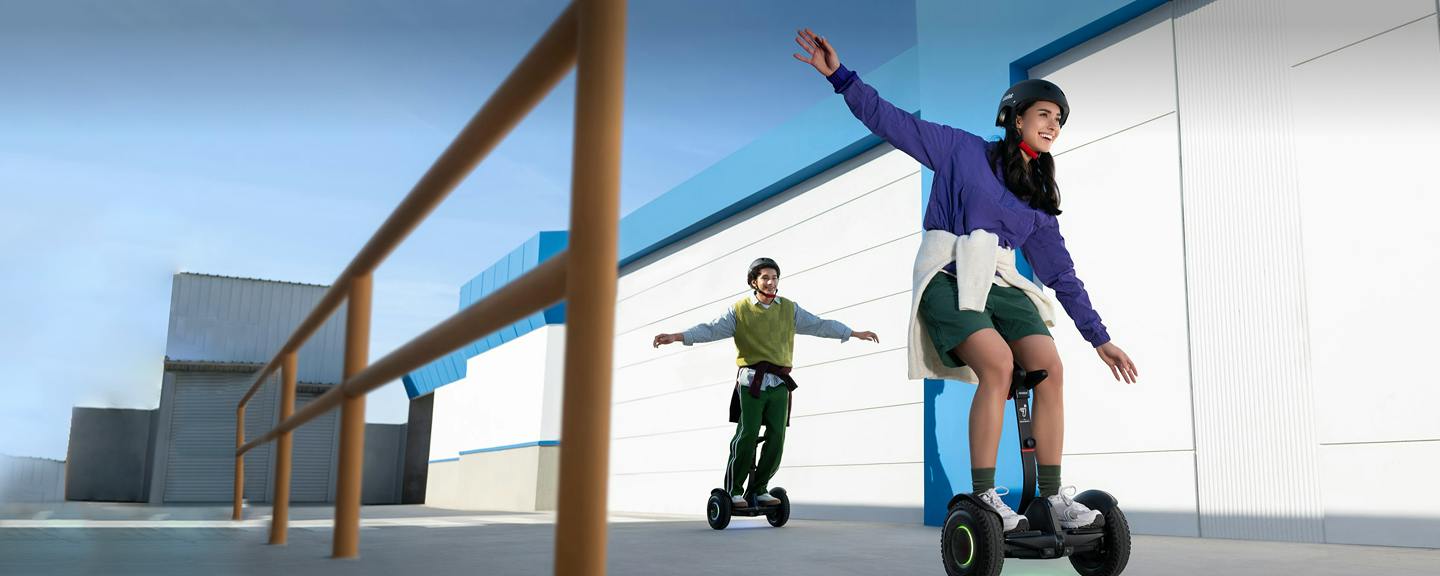
The Ninebot S2 Kids should be considered on its own terms. Its self-balancing design is about family recreation and a younger rider, not carrying adults to work. That distinction matters because a family may want an approachable activity product while still needing an entirely different machine for adult transport.
We would compare the current store listing with the rider’s age, size, supervision plan and intended riding surface. The model can make sense as a focused family purchase, but it is not a substitute for the MAX G3 Plus, MUXI Pro or Xafari.
- Confirm the intended rider and supervision level.
- Use the product page for current safety guidance and included equipment.
- Keep recreation and transport needs as separate buying decisions.
Your route should decide the Segway category
Use the store’s current listings to check the details that can change the decision: range claims, rider limits, dimensions, charging time, included accessories, warranty terms and availability. Cost will also vary with the model, configuration and extras, so we are not treating an old listed amount as a permanent benchmark.
A useful shortlist looks like this: the MAX G3 Plus for the focused commuter, the MUXI Pro for carrying, the Xafari for comfort across mixed routes and the Ninebot S2 Kids for family recreation. That is a more honest comparison than naming one universal winner.

The honest verdict
MAX G3 Plus wins for commuting, MUXI Pro wins for carrying, Xafari wins for mixed-surface comfort and Ninebot S2 Kids wins for family recreation. If we had to recommend one starting point for the widest adult transport audience, it would be the MAX G3 Plus because its purpose is easiest to understand and its footprint should suit more urban storage situations.
The limitation is just as important: Segway’s range is broad because no single model can do every job well. Check the current product pages, measure your storage space and choose around the route you will actually ride.
Choose the MAX G3 Plus for commuting, the MUXI Pro for utility, the Xafari for mixed surfaces and the Ninebot S2 Kids for family recreation.