




A research-led look at Jackery’s UK store’s portable power range, what its smaller and larger stations offer, and the limitations to weigh before choosing.
- Jackery gives buyers several routes to portable power
- Explorer 300D prioritises compact charging
- Solar Generator 500 v2 balances carry size and reserve
- Solar Generator 1000 Plus v2 serves longer use
- Solar charging rewards planning and realistic expectations
- Jackery suits planned power needs better than vague backup hopes
- The honest verdict
A portable power station can mean a quiet way to keep a phone and camera charged at a campsite, or a much larger system intended to support more demanding equipment. Those are different jobs, and a familiar brand name does not make every capacity suitable for both.
We reviewed Jackery’s UK product information rather than testing the equipment. The range includes compact power stations, solar bundles and home energy products, so the useful question is which job each product is built to handle, and what information buyers still need to check.
Heads-up: we earn a commission from some links in this article. It never changes the price you pay.
The short version: Jackery has a broad, clearly tiered portable power range, with useful charging options and solar compatibility. The Explorer 300D makes the clearest case for light, personal use; larger systems make more sense when readers can name the devices and runtime they need. Capacity, recharging conditions and bundle contents deserve a close look.
Jackery gives buyers several routes to portable power
Jackery sells portable power stations, SolarSaga panels, generator bundles and home solar battery systems through its UK store. That mix is a strength for people who want a single-brand route from a small travel unit to a more involved home setup. Its catalogue also makes the category look simpler than it is: watt-hours, output limits and the equipment being powered matter more than a model number alone.
Its product pages highlight several practical advantages: portable units across different capacity tiers, multiple ways to recharge selected stations, solar panel pairing, and expandable battery options on some Plus v2 models. For example, the Explorer 300D Portable Power Station is listed with a 288Wh capacity, five outputs and three USB-C ports, with PD charging up to 140W. That specification makes it a compelling compact charging hub, not a substitute for a household backup system. The Explorer 300D listing
- Choice by capacity: small stations suit lighter loads; larger models address longer or more demanding use.
- Multiple charging routes: selected stations can recharge from mains, a vehicle or compatible solar panels.
- Bundles and add-ons: panels and extra batteries can change the setup, so compare what each listing actually includes.
Explorer 300D prioritises compact charging
The Explorer 300D appears designed for personal electronics and modest travel loads. Jackery lists its 288Wh battery, five outputs and three USB-C ports, which gives it more flexibility for charging several modern devices than a simple single-port battery pack. The brand also describes the unit as weighing 2.5kg. That makes carrying it between a vehicle and a pitch more plausible than treating a larger station as casual luggage. See the Explorer 300D product details.
Its headline 140W PD charging capability is relevant for compatible USB-C devices, but it should not be read as a promise that every output delivers that figure or that every laptop will charge at its maximum rate. Buyers should match the port and cable to their device, and account for conversion losses when estimating how many recharges the stored energy will provide. The product page is the place to confirm current port behaviour and what comes in the box. Check the listed charging details.
The portable format has a clear boundary: 288Wh is a finite reserve. It suits phones, cameras and selected smaller electronics, but cannot run every appliance or sustain a group indefinitely. Solar results depend on weather, panel placement and concurrent use. Check Explorer 300D availability and specifications if that capacity fits your list.
- Write down each device and its power requirement before choosing.
- Estimate how many charging cycles or hours you need away from a socket.
- Check whether simultaneous use changes the output available to each device.
- Only add a solar panel if the extra space and setup time work for the trip.
Solar Generator 500 v2 balances carry size and reserve
The Solar Generator 500 v2 is a step up for readers who need a more substantial reserve than a compact personal station. Jackery’s UK page presents it as a solar generator option, and the Explorer 500 v2 image shows a folding handle that supports moving the unit around. This middle tier may suit a weekend base camp, a work setup away from mains power or occasional support for small devices, provided the output and runtime calculations check out. The Solar Generator 500 v2 page gives the model-specific detail.
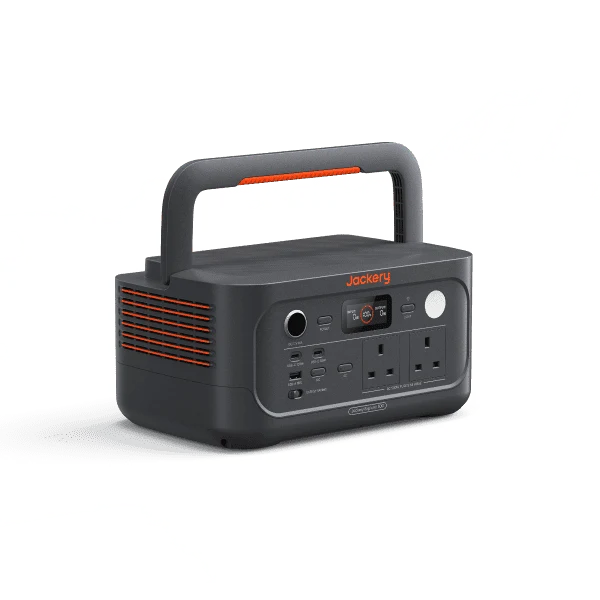
Capacity alone does not decide portability. Consider loaded weight, the walk from car to destination and whether panel and cables travel in the same bag. Bundles also differ, so check whether the listing includes a panel or sells the station alone. Confirm the current Solar Generator 500 v2 configuration and compare it with the smaller Explorer 300D if a lighter setup matters more.
This is likely the more balanced choice for buyers who want a meaningful reserve without immediately moving into the larger, heavier classes. It is less persuasive if the intended load includes equipment with high continuous draw or if the station must be carried over a long distance. The store’s output limits and dimensions should settle those questions; general labels such as “camping” cannot.
Solar Generator 1000 Plus v2 serves longer use
At the larger end of the portable range, the Solar Generator 1000 Plus v2 is positioned for longer use and more demanding plans. Jackery says Plus v2 models support expandable battery options, which can be useful for a buyer building a system around longer runtimes. Expansion adds cost, weight and planning, though, so it is worthwhile only when the extra stored energy solves a defined problem. Review the Solar Generator 1000 Plus v2 details before treating expandability as an automatic benefit.
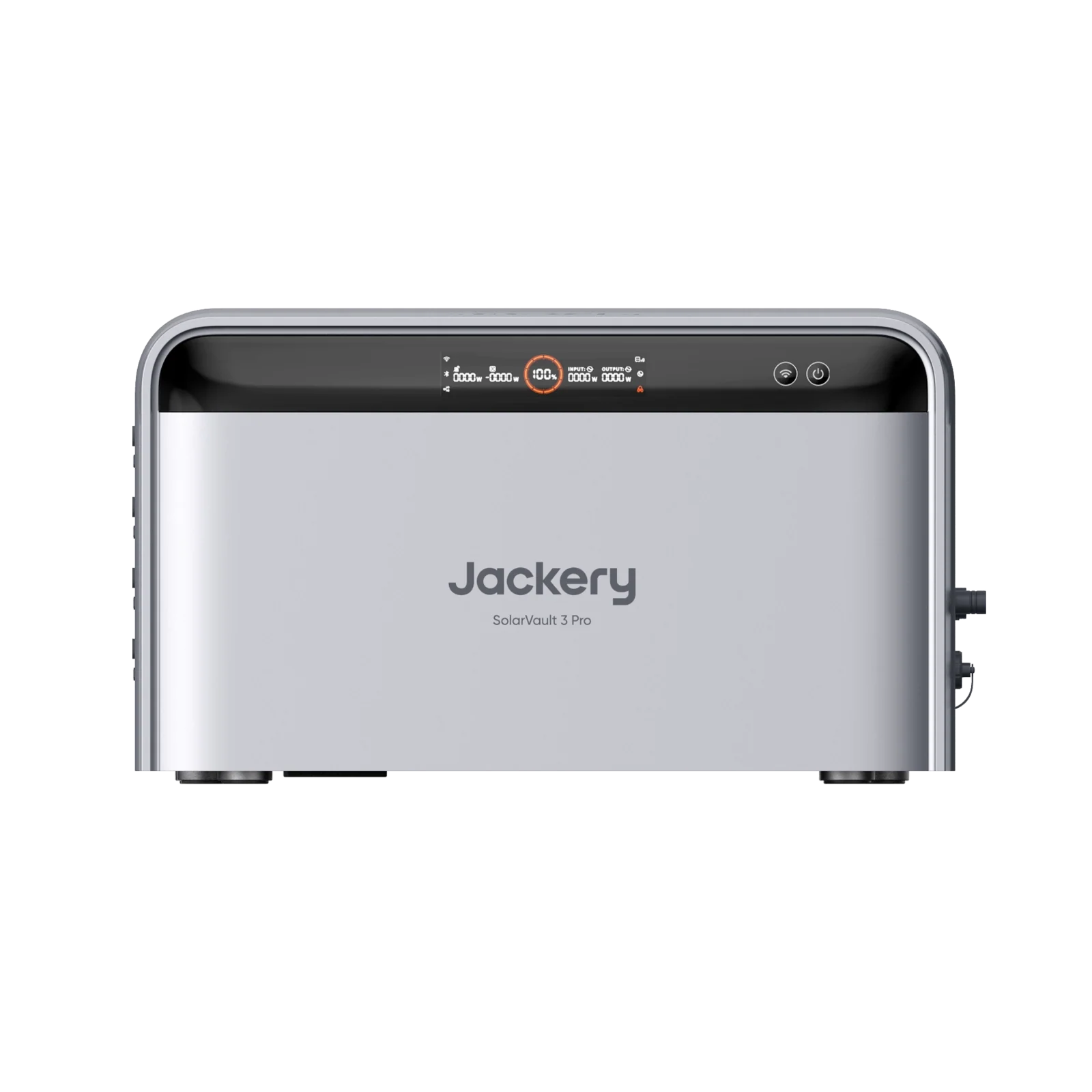
For readers moving beyond portable charging, the home battery category is a separate purchase decision with different installation and system questions.
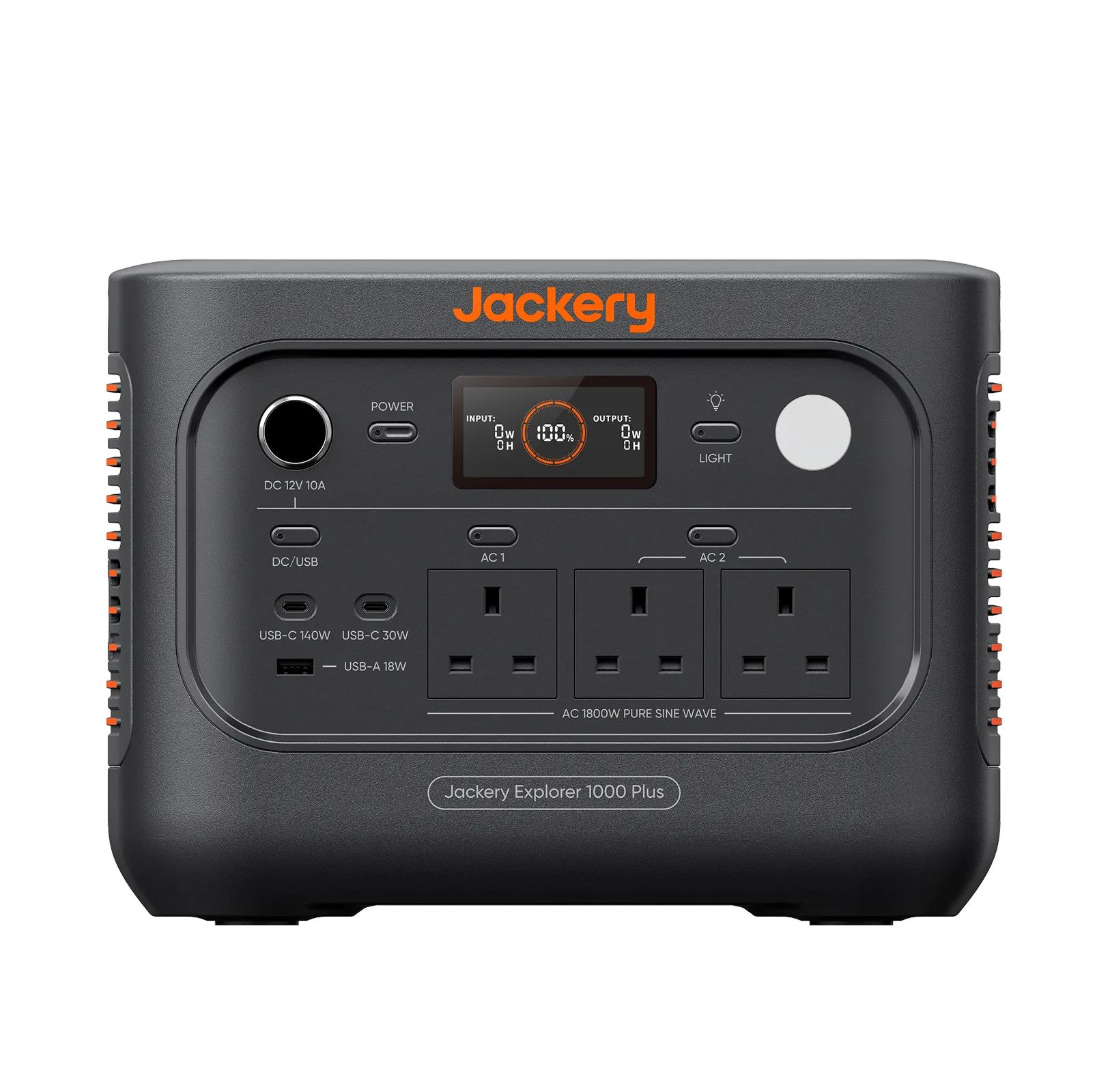
- Check total watt-hours against the expected session length.
- Compare continuous output with the device’s power draw.
- Factor in recharge time and carrying weight.
The larger capacity tier also changes the practical trade-off. More stored energy can support a wider set of needs, but a station still has output limits and must be recharged. It should not be presented as whole-home backup without checking exactly what it can power, for how long and how it connects. Readers comparing this model with home batteries should also note that Jackery lists separate SolarVault systems in the UK catalogue. Check the larger portable option and compare its intended role with the household equipment you actually want to keep running.
- Choose the appliances or devices that matter most during an outage.
- Check their continuous and start-up power needs against the product specification.
- Decide whether expansion is necessary now or just an appealing possibility.
Solar charging rewards planning and realistic expectations
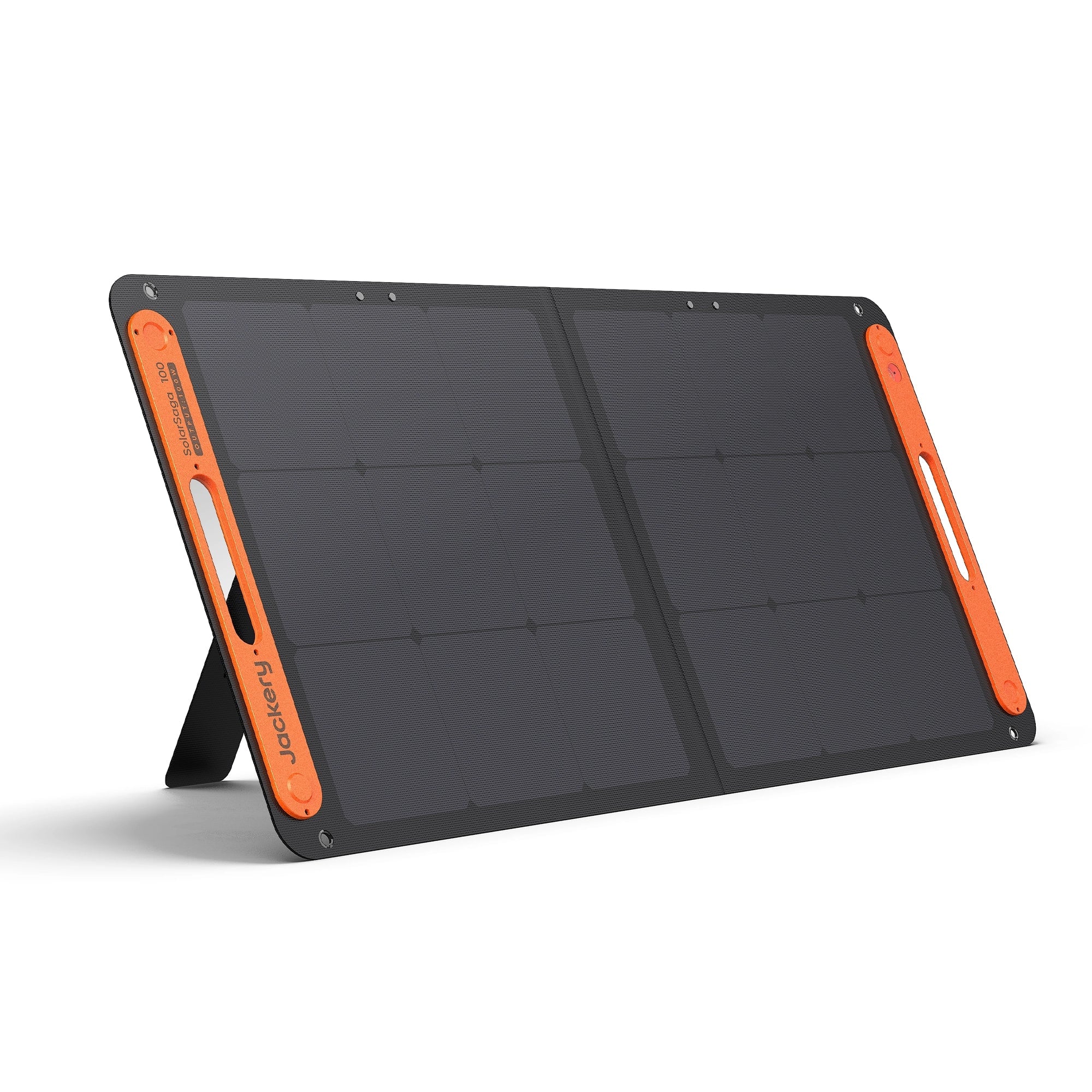
SolarSaga panels give compatible stations a way to recharge away from mains power. Their appeal is obvious for extended outdoor use, but a panel is not a fixed-rate wall socket: available sunlight, shade, angle and season all affect input. A setup that works well in open summer conditions can be less useful on a cloudy day or under tree cover. Check compatible solar generator configurations and review the larger system’s solar options on the store.
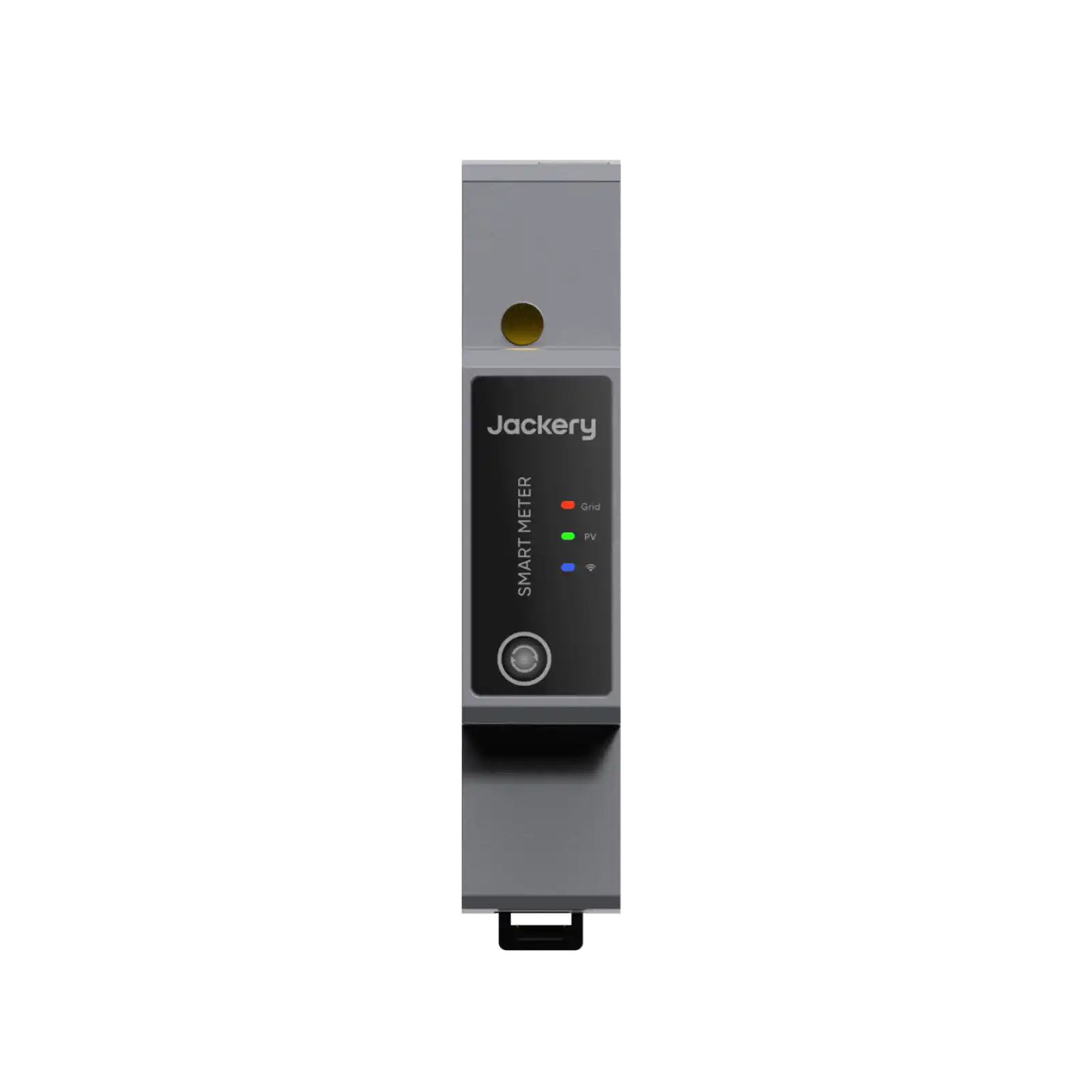
The Smart Meter shown here belongs to SolarVault, not the portable stations. A camping bundle is useful only when its panel and cables suit the station. Inspect the 1000 Plus v2 listing and check the 500 v2 listing for their configurations.
Jackery suits planned power needs better than vague backup hopes
Jackery makes the strongest case for readers who can define the load, duration and setting. A camper charging personal electronics may value the Explorer 300D’s smaller format and USB-C options. Someone expecting a few devices and a longer stay may prefer the 500 v2 tier. The 1000 Plus v2 is more relevant when capacity and expansion matter more than light carry weight. Check the compact Explorer 300D or review the 500 v2 against those needs.
The main limits are practical rather than mysterious: capacity is finite, output compatibility is specific, solar input varies, and accessories can add bulk. The larger system is not automatically the best value if its extra capacity will sit unused. A smaller station is not a bargain if it cannot meet the actual load. Compare the exact UK product pages, including included accessories and shipping or warranty terms, before choosing. Review the Solar Generator 1000 Plus v2 and the Explorer 300D to see how far apart the use cases are.
- Compact station for light personal charging.
- Mid-range tier for a larger portable reserve.
- Higher capacity and expansion for longer, planned use.
The honest verdict
Jackery’s range earns a recommendation for people who want portable power with clear capacity tiers, multiple charging routes and optional solar pairing. The product pages provide useful model specifics, and the 300D, 500 v2 and 1000 Plus v2 offer distinct starting points. We would shortlist a model only after matching its output and runtime to named devices.
The limitation is that no product name can answer the central sizing question for you. Larger capacity brings more weight and higher overall system cost; solar charging depends on conditions; and bundles need careful checking. For a light personal kit, start with the Explorer 300D. For longer or heavier use, compare the larger options against a written load list. Check the current Explorer 300D price, review the Solar Generator 500 v2, or check the 1000 Plus v2 details before deciding.
Jackery is worth considering when the station’s capacity, weight and recharge plan match a specific job.